


MHT CET · Maths · Differential Equations
The population \(\mathrm{P}(\mathrm{t})\) of a certain mouse species at time \(\mathrm{t}\) satisfies the differential equation \(\frac{d P(t)}{d t}=0 \cdot 5 P(t)-450 \cdot\) If \(\mathrm{P}(0)=850\), then the time at which the population becomes zero is
- A \(\left(\frac{1}{2}\right) \log 18\)
- B \(\log 18\)
- C \(2 \log 18\)
- D \(\log 9\)
Answer & Solution
Correct Answer
(C) \(2 \log 18\)
Step-by-step Solution
Detailed explanation
\(\frac{\mathrm{dp}(\mathrm{t})}{\mathrm{dt}}=0.5 \mathrm{p}(\mathrm{t})-450\)
\(\frac{\mathrm{dp}(\mathrm{t})}{\mathrm{dt}}=\frac{1}{2} \mathrm{p}(\mathrm{t})-450 \Rightarrow \frac{\mathrm{dp}(\mathrm{t})}{\mathrm{dt}}=\frac{\mathrm{p}(\mathrm{t})-900}{2}\)
\(\therefore 2 \int \frac{\mathrm{d}[\mathrm{p}(\mathrm{t})]}{\mathrm{p}(\mathrm{t})-900}=\int \mathrm{dt} \Rightarrow 2 \log |\mathrm{p}(\mathrm{t})-900|=\mathrm{t}+\mathrm{c}\)
When \(\mathrm{t}=0, \mathrm{p}(\mathrm{t})=850\)
\(\therefore 2 \log |850-900|=0+\mathrm{c} \Rightarrow \mathrm{c}=2 \log 50\)
\(\therefore 2 \log |\mathrm{p}(\mathrm{t})-900|=\mathrm{t}+2 \log 50\)
When \(\mathrm{p}(\mathrm{t})=0\), we write
\(2 \log |0-900|=\mathrm{t}+2 \log 50\)
\(\therefore \mathrm{t}=2 \log \left|\frac{900}{50}\right|\)
\(\mathrm{t} \quad=2 \log 18\)
\(\frac{\mathrm{dp}(\mathrm{t})}{\mathrm{dt}}=\frac{1}{2} \mathrm{p}(\mathrm{t})-450 \Rightarrow \frac{\mathrm{dp}(\mathrm{t})}{\mathrm{dt}}=\frac{\mathrm{p}(\mathrm{t})-900}{2}\)
\(\therefore 2 \int \frac{\mathrm{d}[\mathrm{p}(\mathrm{t})]}{\mathrm{p}(\mathrm{t})-900}=\int \mathrm{dt} \Rightarrow 2 \log |\mathrm{p}(\mathrm{t})-900|=\mathrm{t}+\mathrm{c}\)
When \(\mathrm{t}=0, \mathrm{p}(\mathrm{t})=850\)
\(\therefore 2 \log |850-900|=0+\mathrm{c} \Rightarrow \mathrm{c}=2 \log 50\)
\(\therefore 2 \log |\mathrm{p}(\mathrm{t})-900|=\mathrm{t}+2 \log 50\)
When \(\mathrm{p}(\mathrm{t})=0\), we write
\(2 \log |0-900|=\mathrm{t}+2 \log 50\)
\(\therefore \mathrm{t}=2 \log \left|\frac{900}{50}\right|\)
\(\mathrm{t} \quad=2 \log 18\)
See the Complete Solution
Get step-by-step explanations for this and 2.5 Lakh+ more JEE, NEET & CET questions.
- Unlock all solutions
- Practice the full chapter
- Track accuracy across PYQs
4.8 rated on Google Play · 14,000+ reviews
More questions from Maths
- The maximum value of Subject to is ..MHT CET 2019 Hard
- The angle between the lines \(3 x=2 y=-z\) and \(-x=6 y=-4 z\) isMHT CET 2025 Medium
- The distance of the point \(\mathrm{P}(3,4,4)\) from the point of intersection of the line joining the points \(\mathrm{Q}(3,-4,-5), \mathrm{R}(2,-3,1)\) and the plane \(2 x+y+z=7\) isMHT CET 2025 Medium
- The general solutions of \(\sin ^{2} x \cdot \sec x=\tan x-\sin x+1\) isMHT CET 2020 Medium
- The curve satisfying the differential equation \(y \mathrm{~d} x-\left(x+3 y^2\right) \mathrm{dy}=0\) and passing through the point \((1,1)\) also passes through the pointMHT CET 2024 Hard
- Let \(P(3,2,6)\) be a point in space and \(Q\) be a point on the line \(\bar{r}=\hat{i}-\hat{j}+2 \hat{k}+\mu(-3 \hat{i}+\hat{j}+5 \hat{k})\). Then the value of \(\mu\) for which the vector \(\overline{\mathrm{PQ}}\) is parallel to the plane \(x-4 y+3 z=1\) isMHT CET 2024 Hard
More PYQs from MHT CET
- The angle between two lines \(\frac{x+1}{2}=\frac{y+3}{2}=\frac{z-4}{-1}\) and \(\frac{x-4}{1}=\frac{y+4}{2}=\frac{z+1}{2}\) isMHT CET 2022 Medium
- Matrix then the value of isMHT CET 2018 Medium
- The value of \(\int \frac{2 x^{12}+5 x^9}{\left(x^5+x^3+1\right)^3} \mathrm{~d} x\) is equal to (where \(C\) is arbitrary constant.)MHT CET 2022 Easy
- Identify name of
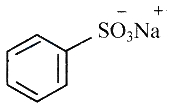 MHT CET 2024 Medium
 - A particle performing uniform circular motion of radius \(\frac{\pi}{2} \mathrm{~m}\) makes ' \(\mathrm{x}\) ' revolutions in time ' \(\mathrm{t}\) '. Its tangential velocity isMHT CET 2023 Medium
- What different elements are found in baryte?MHT CET 2023 Easy