


MHT CET · Maths · Application of Derivatives
The curve \(\left(\frac{x}{a}\right)^n+\left(\frac{y}{b}\right)^n=2, n \in N\) touches the line at the point \((a, b)\), then the equation of the line is
- A \(\frac{x}{a}-\frac{y}{b}=2\)
- B \(\frac{x}{a}+\frac{y}{2 b}=1\)
- C \(\frac{x}{a}+\frac{y}{b}=1\)
- D \(\frac{x}{a}+\frac{y}{b}=2\)
Answer & Solution
Correct Answer
(D) \(\frac{x}{a}+\frac{y}{b}=2\)
Step-by-step Solution
Detailed explanation
Slope of the line \(=\frac{\mathrm{d} y}{\mathrm{~d} x}\) at \((a, b)\)
\(\begin{aligned} & =\frac{-n\left(\frac{x}{a}\right)^{n-1} \cdot \frac{1}{a}}{n \cdot\left(\frac{y}{b}\right)^{n-1} \cdot \frac{1}{b}} \text { at }(a, b) \\ & =\frac{-b}{a}\end{aligned}\)
now equation of the straight line
\(\begin{aligned} & y-b=-\frac{b}{a}(x-a) \\ & \Rightarrow a y-a b=-b x+a b \\ & \Rightarrow b x+a y=2 a b \\ & \Rightarrow \frac{x}{a}+\frac{y}{b}=2\end{aligned}\)
\(\begin{aligned} & =\frac{-n\left(\frac{x}{a}\right)^{n-1} \cdot \frac{1}{a}}{n \cdot\left(\frac{y}{b}\right)^{n-1} \cdot \frac{1}{b}} \text { at }(a, b) \\ & =\frac{-b}{a}\end{aligned}\)
now equation of the straight line
\(\begin{aligned} & y-b=-\frac{b}{a}(x-a) \\ & \Rightarrow a y-a b=-b x+a b \\ & \Rightarrow b x+a y=2 a b \\ & \Rightarrow \frac{x}{a}+\frac{y}{b}=2\end{aligned}\)
See the Complete Solution
Get step-by-step explanations for this and 2.5 Lakh+ more JEE, NEET & CET questions.
- Unlock all solutions
- Practice the full chapter
- Track accuracy across PYQs
4.8 rated on Google Play · 14,000+ reviews
More questions from Maths
- If the statement \(p \vee \sim(q \wedge r)\) is false; then the truth values of \(p, q\) and \(r\) are respectivelyMHT CET 2024 Easy
- The Cartesian equation of a line is \(\frac{x+2}{3}=\frac{y-4}{2}=\frac{z-5}{5}\), then the vector equation of the line isMHT CET 2022 Easy
- In \(\triangle A B C\), with usual notations, if \(\cos \frac{B}{2}=\sqrt{\frac{c+a}{2 a}}\), then \(a^2=\)MHT CET 2025 Medium
- The approximate value of \(f(x)=3 x^{2}+5 x+3\) at \(x=3 \cdot 02\) isMHT CET 2020 Easy
- If \(I=\int_0^{\frac{\pi}{4}} \log (1+\tan x) d x\), then value of \(I\) isMHT CET 2024 Medium
- If \(x_0\) is the point of local minima of \(\mathrm{f}(x)=\overline{\mathrm{a}} \cdot(\overline{\mathrm{b}} \times \overline{\mathrm{c}})\) where \(\overline{\mathrm{a}}=x \hat{\mathrm{i}}-2 \hat{\mathrm{j}}+3 \hat{\mathrm{k}}\), \(\overline{\mathrm{b}}=-2 \hat{\mathrm{i}}+x \hat{\mathrm{j}}-\hat{\mathrm{k}}\), \(\overline{\mathrm{c}}=7 \hat{\mathrm{i}}-2 \hat{\mathrm{j}}+x \hat{\mathrm{k}}\), then value of \(\overline{\mathrm{a}} \cdot \overline{\mathrm{b}}\) at \(x=x_0\) isMHT CET 2024 Hard
More PYQs from MHT CET
- Molal elevation constant is the elevation in boiling point produced byMHT CET 2020 Easy
- A toroid has a core of inner radius \(r_1\) and outer radius \(r_2\), around which \(N\) turns of wire are wound. If the current in the wire is \(I\) then the magnetic field inside the toroid is ( \(\mu_0=\) permeability of free space)MHT CET 2022 Medium
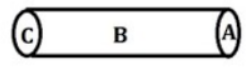
- A hollow cylinder has a charge of ' \(q\) ' \(C\) within it. If \(\phi\) is the electric flux associated with the curved surface B, the flux linked with the plane surface \(A\) will be
 MHT CET 2025 Medium
 - Two spheres each of mass ' \(M\) ' and radius \(\frac{R}{2}\) are connected at the ends of massless rod of length ' \(2 \mathrm{R}\) '. What will be the moment of inertia of the system about an axis passing through centre of one of the spheres and perpendicular to the rod?MHT CET 2023 Medium
- The equation of the circle concentric with the circle and touchingMHT CET 2019 Medium
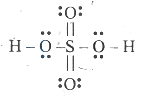
- What is the formal charge on sulfur in following Lewis structure?
 MHT CET 2023 Medium