


MHT CET · Maths · Probability
Let in a Binomial distribution, consisting of 5 independent trials, probabilities of exactly 1 and 2 successes be 0.4096 and 0.2048 respectively. Then the probability of getting exactly 3 successes is equal to
- A \(\frac{80}{243}\)
- B \(\frac{40}{243}\)
- C \(\frac{32}{625}\)
- D \(\frac{128}{625}\)
Answer & Solution
Correct Answer
(C) \(\frac{32}{625}\)
Step-by-step Solution
Detailed explanation
Let p be the probability of success.
\(\begin{aligned}
& \mathrm{P}(\mathrm{X}=1)=0.4096 \text { and } \mathrm{P}(\mathrm{X}=2)=0.2048 \\
& \Rightarrow{ }^5 \mathrm{C}_1 \mathrm{p}^1 \mathrm{q}^4=0.4096 \text { and }{ }^5 \mathrm{C}_2 \mathrm{p}^2 \mathrm{q}^3=0.2048 \\
& \Rightarrow 5 \mathrm{pq}^4=0.4096 \text { and } 10 \mathrm{p}^2 \mathrm{q}^3=0.2048 \\
& \Rightarrow \frac{10 \mathrm{p}^2 \mathrm{q}^3}{5 \mathrm{pq}^4}=\frac{0.2048}{0.4096}
\end{aligned}\)
\(\begin{aligned} & \Rightarrow \frac{2 \mathrm{p}}{\mathrm{q}}=\frac{1}{2} \\ & \Rightarrow 4 \mathrm{p}=\mathrm{q} \\ & \Rightarrow 4 \mathrm{p}=1-\mathrm{p} \\ & \Rightarrow 5 \mathrm{p}=1 \\ & \Rightarrow \mathrm{p}=\frac{1}{5}\end{aligned}\)
\(\begin{aligned} & \Rightarrow q=1-\frac{1}{5}=\frac{4}{5} \\ & \begin{aligned} P(X=3) & ={ }^5 C_3 p^3 q^2 \\ & =10\left(\frac{1}{5}\right)^3\left(\frac{4}{5}\right)^2 \\ & =10 \times \frac{1}{125} \times \frac{16}{25}=\frac{32}{625}\end{aligned}\end{aligned}\)
\(\begin{aligned}
& \mathrm{P}(\mathrm{X}=1)=0.4096 \text { and } \mathrm{P}(\mathrm{X}=2)=0.2048 \\
& \Rightarrow{ }^5 \mathrm{C}_1 \mathrm{p}^1 \mathrm{q}^4=0.4096 \text { and }{ }^5 \mathrm{C}_2 \mathrm{p}^2 \mathrm{q}^3=0.2048 \\
& \Rightarrow 5 \mathrm{pq}^4=0.4096 \text { and } 10 \mathrm{p}^2 \mathrm{q}^3=0.2048 \\
& \Rightarrow \frac{10 \mathrm{p}^2 \mathrm{q}^3}{5 \mathrm{pq}^4}=\frac{0.2048}{0.4096}
\end{aligned}\)
\(\begin{aligned} & \Rightarrow \frac{2 \mathrm{p}}{\mathrm{q}}=\frac{1}{2} \\ & \Rightarrow 4 \mathrm{p}=\mathrm{q} \\ & \Rightarrow 4 \mathrm{p}=1-\mathrm{p} \\ & \Rightarrow 5 \mathrm{p}=1 \\ & \Rightarrow \mathrm{p}=\frac{1}{5}\end{aligned}\)
\(\begin{aligned} & \Rightarrow q=1-\frac{1}{5}=\frac{4}{5} \\ & \begin{aligned} P(X=3) & ={ }^5 C_3 p^3 q^2 \\ & =10\left(\frac{1}{5}\right)^3\left(\frac{4}{5}\right)^2 \\ & =10 \times \frac{1}{125} \times \frac{16}{25}=\frac{32}{625}\end{aligned}\end{aligned}\)
See the Complete Solution
Get step-by-step explanations for this and 2.5 Lakh+ more JEE, NEET & CET questions.
- Unlock all solutions
- Practice the full chapter
- Track accuracy across PYQs
4.8 rated on Google Play · 14,000+ reviews
More questions from Maths
- Consider the three statements -
\(\mathrm{p}: \forall \mathrm{n} \in \mathbb{N}, 10 \mathrm{n}-3\) is a prime number, when n is not divisible by 3 .
\(\mathrm{q}: \frac{2}{\sqrt{3}}, \frac{-2}{\sqrt{3}}, \frac{-1}{\sqrt{3}}\) are the direction cosines of a directed line.
\(\mathrm{r}: \sin x\) is an increasing function in the interval \(\left[\frac{-\pi}{2}, \frac{\pi}{2}\right]\).
Then which of the following statement pattern has truth value true?MHT CET 2025 Medium - If \(\mathrm{f}(\mathrm{x})=2\{\mathrm{x}\}+5 \mathrm{x}\), where \(\{\mathrm{x}\}\) is fractional part function, then \(f(-1.4)\) isMHT CET 2021 Easy
- The probability distribution of a random variable \(\mathrm{X}\) is
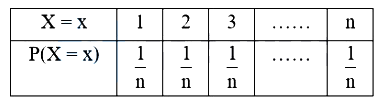
Then \(\operatorname{Var}(\mathrm{X})=\)MHT CET 2021 Medium - \(\frac{d}{d x}\left(\sqrt{\frac{1-\tan x}{1+\tan x}}\right)=\)MHT CET 2022 Medium
- The function \(\mathrm{f}(x)=x^3-6 x^2+a x+b\) satisfyies the conditions of Rolle's theorem in \([1,3]\). Then the values of \(a\) and \(b\) are respectivelyMHT CET 2025 Medium
- For a real number \(x,[x]\) denotes the greatest integer less than or equal to \(x\). Then the value of
\(\left[\frac{1}{2}\right]+\left[\frac{1}{2}+\frac{1}{100}\right]+\left[\frac{1}{2}+\frac{2}{100}\right]+\left[\frac{1}{2}+\frac{3}{100}\right]+\ldots \ldots \ldots \ldots .+\left[\frac{1}{2}+\frac{99}{100}\right]=\)MHT CET 2025 Medium
More PYQs from MHT CET
- Heat of combustion of \(\mathrm{C}_{(\mathrm{s})}, \mathrm{H}_{2(\mathrm{~g})}\) and \(\mathrm{C}_{2} \mathrm{H}_{6(\mathrm{~g})}\) are \(-x_{1},-x_{2}\) and \(-x_{3}\) respectively. Hence heat of formation of \(\mathrm{C}_{2} \mathrm{H}_{6(\mathrm{~g})}\) isMHT CET 2020 Easy
- If \(A=\left[\begin{array}{cc}2 & 3 \\ -4 & 1\end{array}\right]\), then adj \(\left(3 A^2+12 A\right)\) is equal toMHT CET 2022 Medium
- Identify secondary amine from following.MHT CET 2025 Easy
- A series LCR circuit has \(\mathrm{R}=200 \Omega, \mathrm{L}=663 \mathrm{mH}\) and \(\mathrm{C}=26 \cdot 5 \mu \mathrm{F}\). The applied alternating voltage has an amplitude of \(50 \mathrm{~V}\) and a frequency of \(60 \mathrm{~Hz}\) so that \(\mathrm{X}_{\mathrm{L}}=250 \Omega\) and \(\mathrm{Xc}=100 \Omega\). The peak current isMHT CET 2020 Medium
- Which of the following is a correct relation for Gay-Lussac's law?MHT CET 2022 Easy
- Identify the monomer used in preparation of polyacrylonitrile?MHT CET 2025 Easy