


MHT CET · Maths · Differentiation
If \(\frac{x}{\sqrt{1+x}}+\frac{y}{\sqrt{1+y}}=0, x \neq y\), then \(\frac{d y}{d x}=0\)
- A \(\frac{1}{2}\)
- B 0
- C -1
- D 1
Answer & Solution
Correct Answer
(C) -1
Step-by-step Solution
Detailed explanation
(B)
\(\frac{x}{\sqrt{1+x}}+\frac{y}{\sqrt{1+y}}=0 \)
\( x \cdot(\sqrt{1+y})+y(\sqrt{1+x})=0 \quad \Rightarrow x \cdot \sqrt{1+y}\) \(=-y \sqrt{1+x}\)
Squaring both sides we get,
\(\begin{array}{l}
x^{2}(1+y)=y^{2}(1+x) \Rightarrow x^{2}+x^{2} y=y^{2}+x y^{2} \\
x^{2}-y^{2}=x y^{2}-x^{2} y \Rightarrow(x-y)(x+y)=-x y(x-y) \\
x+y=-x y \Rightarrow(1+x) y=-x \Rightarrow y=\frac{-x}{1+x}
\end{array}\)
Differentiating both sides w.r.t. \(x\), we get
\(\begin{aligned}
& \frac{d y}{d x}=-\frac{(1+x)(1)-(x)(1)}{(1+x)^{2}}=\frac{-1}{(1+x)^{2}} \\
\therefore &(1+x)^{2} \frac{d y}{d x}=-1
\end{aligned}\)
\(\frac{x}{\sqrt{1+x}}+\frac{y}{\sqrt{1+y}}=0 \)
\( x \cdot(\sqrt{1+y})+y(\sqrt{1+x})=0 \quad \Rightarrow x \cdot \sqrt{1+y}\) \(=-y \sqrt{1+x}\)
Squaring both sides we get,
\(\begin{array}{l}
x^{2}(1+y)=y^{2}(1+x) \Rightarrow x^{2}+x^{2} y=y^{2}+x y^{2} \\
x^{2}-y^{2}=x y^{2}-x^{2} y \Rightarrow(x-y)(x+y)=-x y(x-y) \\
x+y=-x y \Rightarrow(1+x) y=-x \Rightarrow y=\frac{-x}{1+x}
\end{array}\)
Differentiating both sides w.r.t. \(x\), we get
\(\begin{aligned}
& \frac{d y}{d x}=-\frac{(1+x)(1)-(x)(1)}{(1+x)^{2}}=\frac{-1}{(1+x)^{2}} \\
\therefore &(1+x)^{2} \frac{d y}{d x}=-1
\end{aligned}\)
See the Complete Solution
Get step-by-step explanations for this and 2.5 Lakh+ more JEE, NEET & CET questions.
- Unlock all solutions
- Practice the full chapter
- Track accuracy across PYQs
4.8 rated on Google Play · 14,000+ reviews
More questions from Maths
- Which of the following statement pattern is a tautology?
\(\mathrm{S}_{1} \equiv(\sim \mathrm{q} \wedge \mathrm{p}) \wedge \mathrm{q} \
\mathrm{S}_{2} \equiv[\mathrm{p} \wedge(\mathrm{p} \rightarrow \mathrm{q})] \rightarrow \mathrm{q} \
\)\(\mathrm{S}_{3} \equiv(\mathrm{p} \wedge \mathrm{q}) \wedge\)\( (\sim \mathrm{p} \vee \sim \mathrm{q}) \
\mathrm{S}_{4} \equiv(\mathrm{p} \wedge \mathrm{q}) \rightarrow \mathrm{r}\)MHT CET 2020 Easy - The domain of the function given by \(2^x+2^y=2\) isMHT CET 2023 Easy
- In a box containing 100 bulbs, 10 are defective. The probability that out of 20 bulbs selected at random, none is defective isMHT CET 2020 Easy
- If the function \(f(x)=\frac{1-\sin 2 x+\cos 2 x}{1+\sin 2 x+\cos 2 x}\) if \(\quad x \neq \frac{\pi}{2}\)
\(=\mathrm{k} \quad\) if \(\quad x=\frac{\pi}{2}\)
is continuous at \(x=\frac{\pi}{2}\), then \(\mathrm{k}=\)MHT CET 2020 Easy - Two cards are drawn successively with replacement from a well shuffled pack of 52 cards. The mean of number of kings isMHT CET 2022 Medium
- A random variable has the following probability distribution

The then value of \(p\) isMHT CET 2024 Easy
More PYQs from MHT CET
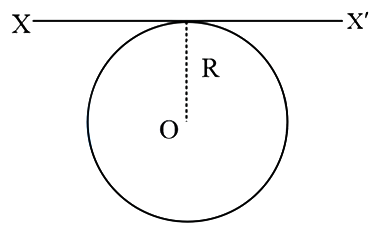
- A thin metal wire of length ‘ ’ and uniform linear mass density ‘ ’ is bent into a circular coil with ‘ ’ as centre. The moment of inertia of a coil about the axis is
 MHT CET 2019 Easy
 - The equation of the plane through the line of intersection of \(\overline{\mathrm{r}} \cdot(2 \hat{i}-3 \hat{\mathrm{j}}+4 \hat{\mathrm{k}})=1\) and \(\overline{\mathrm{r}} \cdot(\hat{i}-\hat{\mathrm{j}})+4=0\) and perpandicular to \(\bar{r} \cdot(2 \hat{i}-\hat{j}+\hat{k})+8=0\) is \(\bar{r} \cdot(-5 \hat{i}+2 \hat{j}+12 \hat{k})=\mu\). Then \(\mu=\)MHT CET 2025 Medium
- Protein gives blue colour withMHT CET 2007 Hard
- The displacement of a particle in a medium is \(y=10^{-4} \sin \left[100 t+20 x+\frac{\pi}{3}\right] \mathrm{m}\), where \(t\) is in second and \(x\) is in metre. The speed of the wave isMHT CET 2022 Easy
- If \(\tan \theta=\frac{1}{3}\), then \(\cos 2 \theta=\)MHT CET 2020 Easy
- If the area of parallelogram, whose diagonals are \(\hat{i}-\hat{j}+2 \hat{k}\) and \(2 \hat{i}+3 \hat{j}+\alpha \hat{k}\) is \(\frac{\sqrt{93}}{2}\) sq. unit, then \(\alpha=\)MHT CET 2025 Medium