


MHT CET · Maths · Pair of Lines
If the slope of one of the lines represented by \(a x^2+(2 a+1) x y+2 y^2=0\) is reciprocal of the slope of the other, then the sum of squares of slopes is
- A \(\frac{17}{4}\)
- B \(\frac{82}{9}\)
- C \(\frac{97}{36}\)
- D 2
Answer & Solution
Correct Answer
(A) \(\frac{17}{4}\)
Step-by-step Solution
Detailed explanation
Given equation of pair of lines is
\(\begin{aligned}
& \mathrm{a} x^2+(2 \mathrm{a}+1) x y+2 y^2=0 \\
& \mathrm{~A}=\mathrm{a}, \mathrm{H}=\frac{2 \mathrm{a}+1}{2}, \mathrm{~B}=2
\end{aligned}\)
Given condition,
\(\mathrm{m}_1=\frac{1}{\mathrm{~m}_2} \)
\( \therefore \mathrm{m}_1 \cdot \mathrm{m}_2=1 \)
\( \text { Product of slopes }=\frac{\mathrm{A}}{\mathrm{B}}=\frac{\mathrm{a}}{2} \)
\( \therefore \mathrm{m}_1 \cdot \mathrm{m}_2=1=\frac{\mathrm{a}}{2} \)
\( \therefore \mathrm{a}=2 \)
\( \text { Also, sum of slopes }=\frac{-2 \mathrm{H}}{\mathrm{B}}=-\left(\frac{2 \mathrm{a}+1}{2}\right)=\frac{-5}{2} \)
\( \text { Using }\left(\mathrm{m}_1+\mathrm{m}_2\right)^2=\mathrm{m}_1^2+\mathrm{m}_2^2+2 \mathrm{~m}_1 \mathrm{~m}_2 \)
\( \left(\frac{-5}{2}\right)^2=\mathrm{m}_1^2+\mathrm{m}_2^2+2 \times 1 \)
\( \therefore \mathrm{m}_1^2+\mathrm{m}_2^2=\frac{25}{4}-2 \)
\( \therefore \mathrm{m}_1^2+\mathrm{m}_2^2=\frac{17}{4}\)
\(\begin{aligned}
& \mathrm{a} x^2+(2 \mathrm{a}+1) x y+2 y^2=0 \\
& \mathrm{~A}=\mathrm{a}, \mathrm{H}=\frac{2 \mathrm{a}+1}{2}, \mathrm{~B}=2
\end{aligned}\)
Given condition,
\(\mathrm{m}_1=\frac{1}{\mathrm{~m}_2} \)
\( \therefore \mathrm{m}_1 \cdot \mathrm{m}_2=1 \)
\( \text { Product of slopes }=\frac{\mathrm{A}}{\mathrm{B}}=\frac{\mathrm{a}}{2} \)
\( \therefore \mathrm{m}_1 \cdot \mathrm{m}_2=1=\frac{\mathrm{a}}{2} \)
\( \therefore \mathrm{a}=2 \)
\( \text { Also, sum of slopes }=\frac{-2 \mathrm{H}}{\mathrm{B}}=-\left(\frac{2 \mathrm{a}+1}{2}\right)=\frac{-5}{2} \)
\( \text { Using }\left(\mathrm{m}_1+\mathrm{m}_2\right)^2=\mathrm{m}_1^2+\mathrm{m}_2^2+2 \mathrm{~m}_1 \mathrm{~m}_2 \)
\( \left(\frac{-5}{2}\right)^2=\mathrm{m}_1^2+\mathrm{m}_2^2+2 \times 1 \)
\( \therefore \mathrm{m}_1^2+\mathrm{m}_2^2=\frac{25}{4}-2 \)
\( \therefore \mathrm{m}_1^2+\mathrm{m}_2^2=\frac{17}{4}\)
See the Complete Solution
Get step-by-step explanations for this and 2.5 Lakh+ more JEE, NEET & CET questions.
- Unlock all solutions
- Practice the full chapter
- Track accuracy across PYQs
4.8 rated on Google Play · 14,000+ reviews
More questions from Maths
- Which one of the following is the pair of equivalent circuits?
i.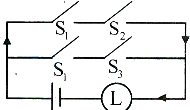
ii.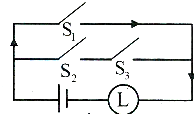
iii.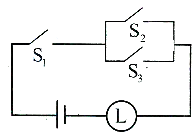
iv.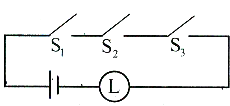
v.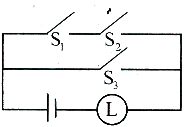 MHT CET 2024 Easy
 - The particular solution of differential equation \(\left(1+y^2\right)(1+\log x) \mathrm{d} x+x \mathrm{~d} y=0\) at \(x=1, y=1\) isMHT CET 2024 Medium
- If \(\bar{a}, \bar{b}\) and \(\bar{c}\) are any three non-zero vectors, then \((\bar{a}+2 \bar{b}+\bar{c}) \cdot[(\bar{a}-\bar{b}) \times(\bar{a}-\bar{b}-\bar{c})]=\)MHT CET 2023 Medium
- \(\lim _{x \rightarrow \infty} \frac{(2 x+1)^{50}+(2 x+2)^{50}+(2 x+3)^{50}+\cdots \cdots+(2 x+100)^{50}}{(2 x)^{50}+(10)^{50}}=\cdots\)MHT CET 2025 Medium
- Let k be a non-zero real number.
If \(\mathrm{f}(x)=\left\{\begin{array}{cc}\frac{\left(\mathrm{e}^x-1\right)^2}{\sin \left(\frac{x}{\mathrm{k}}\right) \log \left(1+\frac{x}{4}\right)} & , x \neq 0 \ 12 & , x=0\end{array}\right.\)
is a continuous function, then the value of \(k\) isMHT CET 2024 Hard - \(\int \log x \cdot(\log x+2) d x=\)MHT CET 2020 Hard
More PYQs from MHT CET
- The formula for the physical quantity is \(\mathrm{P}=\frac{\mathrm{x}^3 \mathrm{y}}{\mathrm{z}^2}\) and the percentage error in the determination of physical quantities \(x, y, z\) are \(0.6 \%, 3 \%\) and \(1.3 \%\) respectively. The percentage error in the measurement of \(P\) isMHT CET 2025 Easy
- What is the formal charge on sulfur in following Lewis structure?
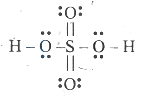 MHT CET 2023 Medium
 - \(\int_0^2 \frac{x-\mathrm{a}}{x+\mathrm{a}} \mathrm{d} x=\)MHT CET 2024 Medium
- In the thermodynamic processes, which of the following statements is NOT true?MHT CET 2025 Easy
- Which activity from following is exhibited by Lewis base according to definition?MHT CET 2023 Easy
- The order of the differential equation whose general solution is given by \(\mathrm{y}=\left(\mathrm{C}_1+\mathrm{C}_2\right) \sin \left(\mathrm{x}+\mathrm{C}_3\right)-\mathrm{C}_4 \mathrm{e}^{x+\mathrm{C}_5}\) is (where \(\mathrm{C}_1, \mathrm{C}_2, \mathrm{C}_3, \mathrm{C}_4, \mathrm{C}_5\) are arbitrary constants)MHT CET 2025 Medium