


MHT CET · Chemistry · p Block Elements (Group 15, 16, 17 & 18)
Which of the following is an acidic oxide?
- A CO
- B NO
- C \(\mathrm{N}_2 \mathrm{O}\)
- D \(\mathrm{N}_2 \mathrm{O}_5\)
Answer & Solution
Correct Answer
(D) \(\mathrm{N}_2 \mathrm{O}_5\)
Step-by-step Solution
Detailed explanation
No Solution
See the Complete Solution
Get step-by-step explanations for this and 2.5 Lakh+ more JEE, NEET & CET questions.
- Unlock all solutions
- Practice the full chapter
- Track accuracy across PYQs
4.8 rated on Google Play · 14,000+ reviews
More questions from Chemistry
- Which among the following elements does NOT exhibit ferromagnetic properties?MHT CET 2023 Easy
- What is IUPAC name of the following compound?
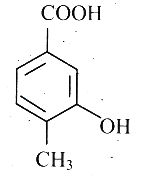 MHT CET 2024 Easy
 - Calculate the edge length of unit cell that crystallises to form bcc structure. (Radius of atom is \(2.17 \times 10^{-8} \mathrm{~cm}, \sqrt{3}=1.732\) )MHT CET 2022 Easy
- Identify tertiary amine from following.MHT CET 2025 Easy
- A buffer solution contains equal concentrations of weak acid and its salt with strong base. Calculate pH of buffer solution if dissociation constant of weak acid is \(1.8 \times 10^{-5}\).MHT CET 2024 Medium
- Identify the example of zero-dimensional nanostructure from following.MHT CET 2023 Hard
More PYQs from MHT CET
- What are the different types of bonds formed by sulphur with oxygen in thiosulfuric acid?MHT CET 2025 Easy
- The shortest distance between lines \(\bar{r}=(\hat{i}+2 \hat{j}-\hat{k})+\lambda(2 \hat{i}+\hat{j}-3 \hat{k})\) and \(\bar{r}=(2 \hat{i}-\hat{j}+2 \hat{k})+\mu(\hat{i}-\hat{j}+\hat{k})\) isMHT CET 2024 Hard
- \(\cos ^3\left(\frac{\pi}{8}\right) \cos \left(\frac{3 \pi}{8}\right)+\sin ^3\left(\frac{\pi}{8}\right) \sin \left(\frac{3 \pi}{8}\right)=\)MHT CET 2024 Hard
- In a \(\triangle \mathrm{PQR}, \mathrm{m} \angle \mathrm{R}=\frac{\pi}{2}\). If \(\tan \left(\frac{\mathrm{P}}{2}\right)\) and \(\tan \left(\frac{\mathrm{Q}}{2}\right)\) are the roots of the equation \(a x^2+b x+c=0(a \neq 0)\), thenMHT CET 2024 Medium
- A series combination of \(n_1\) capacitors, each of value \(C_1\) is charged by a source of potential difference 6 V . Another parallel combination of \(\mathrm{n}_2\) capacitors, each of value \(\mathrm{C}_2\) is charged by a source of potential' difference 2 V . Total energy of both the combinations is same. The value of \(\mathrm{C}_2\) in terms of \(\mathrm{C}_1\) isMHT CET 2024 Hard
- The increasing order of \(\mathrm{PH}^{\mathrm{H}}\) of \(0.1 \mathrm{M}\) solution of the following compounds isMHT CET 2022 Medium