


MHT CET · Chemistry · Structure of Atom
When an electron in a hydrogen atom jumps from the third excited state to the ground state, the de-Broglie wavelength associated with the electron becomes
- A \(\frac{1}{32}\)
- B \(\frac{1}{4}\)
- C \(\frac{1}{8}\)
- D \(\frac{1}{16}\)
Answer & Solution
Correct Answer
(B) \(\frac{1}{4}\)
Step-by-step Solution
Detailed explanation
The De Broglie wavelength is \(\lambda=\frac{h}{p}\), where \(h=\) Planck's constant and \(p=\) momentum of the electron. Also, momentum \(p=m v\) and kinetic energy \(E_K=\frac{1}{2} m v^2\) From the above equation, we can relate momentum \(p\) and kinetic energy \(E_K\) as, \(p=\sqrt{2 m E_K}\)
Now the ratio of wavelength of hydrogen atom when the atom jumps from third excited state to ground state viz \((n=4\) to \(n=1\) )
\(\frac{\lambda_1}{\lambda_2}=\frac{\frac{h}{p_1}}{\frac{h}{p_2}}=\frac{p_2}{p_1}=\sqrt{\frac{E_{K 2}}{E_{K 1}}}\)
Also, we know \(E_{K n}=\frac{-13.6 Z^2}{n^2}\)
Using equation (1),
\(\frac{\lambda_1}{\lambda_2}=\frac{\sqrt{1^2}}{\sqrt{4^2}}\)
So, the ratio of the wavelength of ground state \(\{n=1\}\) to \(3^{\text {rd }}\) excited state \(\{n=4\}\) is \(\frac{1}{4}\).
Now the ratio of wavelength of hydrogen atom when the atom jumps from third excited state to ground state viz \((n=4\) to \(n=1\) )
\(\frac{\lambda_1}{\lambda_2}=\frac{\frac{h}{p_1}}{\frac{h}{p_2}}=\frac{p_2}{p_1}=\sqrt{\frac{E_{K 2}}{E_{K 1}}}\)
Also, we know \(E_{K n}=\frac{-13.6 Z^2}{n^2}\)
Using equation (1),
\(\frac{\lambda_1}{\lambda_2}=\frac{\sqrt{1^2}}{\sqrt{4^2}}\)
So, the ratio of the wavelength of ground state \(\{n=1\}\) to \(3^{\text {rd }}\) excited state \(\{n=4\}\) is \(\frac{1}{4}\).
See the Complete Solution
Get step-by-step explanations for this and 2.5 Lakh+ more JEE, NEET & CET questions.
- Unlock all solutions
- Practice the full chapter
- Track accuracy across PYQs
4.8 rated on Google Play · 14,000+ reviews
More questions from Chemistry
- The reagent used Gatterman-Koch formylation of arene isMHT CET 2021 Medium
- Which of the following phosphorus oxyacids can act as a reducing agent?MHT CET 2011 Easy
- Identify homopolymer from following.MHT CET 2024 Medium
- Which among the following carbocation is most reactive?MHT CET 2020 Medium
- Which of the following is the strongest base?MHT CET 2012 Medium
- For a zero order reaction \(\mathrm{A} \longrightarrow\) product. Conc. of A decreases from \(0.8 \mathrm{~mol} \mathrm{dm}^{-3}\) to \(0.2 \mathrm{~mol} \mathrm{dm}^{-3}\) in 6 minute. What is rate constant of the reaction?MHT CET 2024 Easy
More PYQs from MHT CET
- Statement I: Penetration of sperm into ovum is a chemical process
Statement II: Acrosome of sperm secretes hyaluronidase which dissolves vitelline membrane of ovumMHT CET 2021 Medium - What is the IUPC name of the compound?
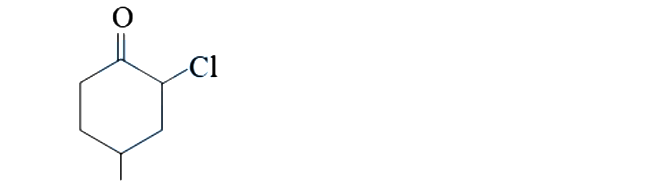 MHT CET 2022 Easy
 - In hydrogen atoms, radius of the smallest orbit of the electron is \(a_0\), the radius of the third orbit isMHT CET 2022 Easy
- A motor cyclist has to rotate in horizontal circles inside the cylindrical wall of inner radius ' R ' metre. If the coefficient of friction between the wall and the tyres is ' \(\mu_{\mathrm{s}}\) ', then the minimum speed required is ( \(\mathrm{g}=\) acceleration due to gravity)MHT CET 2025 Medium
- A line with positive direction cosines passes through the point \(\mathrm{P}(2,-1,2)\) and makes equal angles with co-ordinate axes. The line meets the plane \(2 x+y+z=9\) at point Q . Then the length of the line segment PQ equalsMHT CET 2024 Easy
- For the following frequency distribution
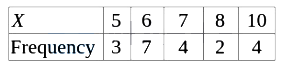
The variance isMHT CET 2022 Easy