


MHT CET · Chemistry · Biomolecules
What is the total number of carbon atoms present in a sugar molecule of RNA nucleotide?
- A 6
- B 5
- C 4
- D 12
Answer & Solution
Correct Answer
(B) 5
Step-by-step Solution
Detailed explanation
The sugar molecule in an RNA nucleotide is ribose, which has 5 carbon atoms. Total carbon atoms = 5
See the Complete Solution
Get step-by-step explanations for this and 2.5 Lakh+ more JEE, NEET & CET questions.
- Unlock all solutions
- Practice the full chapter
- Track accuracy across PYQs
4.8 rated on Google Play · 14,000+ reviews
More questions from Chemistry
- The standard reduction potential for \(\mathrm{Mg}^{2+} / \mathrm{Mg}\) is \(-2.37 \mathrm{~V}\) and for \(\mathrm{Cu}^{2+} / \mathrm{Cu}\) is \(0.337\). The \(E_{\text {cell }}^{\circ}\) for the following reaction is \(\mathrm{Mg}+\mathrm{Cu}^{2+} \longrightarrow \mathrm{Mg}^{2+}+\mathrm{Cu}\)MHT CET 2009 Easy
- Identify the product \(X\) in the following reaction. Sodium propanoate \(\xrightarrow[\Delta]{\text { soda-lime }} X+\) sodium carbonateMHT CET 2024 Hard
- Which among the following phenols does NOT correctly match with their IUPAC names?MHT CET 2023 Easy
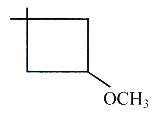
- IUPAC name of the compound
 MHT CET 2024 Medium
 - Lemon gives sour taste because ofMHT CET 2007 Easy
- Which among the following statement is NOT true about covalent network solid?MHT CET 2022 Easy
More PYQs from MHT CET
- \(\int x \log x d x\) is equal toMHT CET 2009 Medium
- Identify product \(\mathrm{B}\) in the following reaction.
 MHT CET 2023 Easy
 - The line \(L\) given by \(\frac{x}{5}+\frac{y}{b} \doteq 1\) passes through the point \((13,32)\). The line K is parallel to line L and has the equation \(\frac{x}{c}+\frac{y}{3}=1\). Then the distance between L and K is \(\qquad\) units.MHT CET 2024 Easy
- If \(\mathrm{f}(x)=\left(\frac{1+\tan x}{1+\sin x}\right)^{\operatorname{cosec} x}\) is continuous at \(x=0\), then \(f(0)\) is equal toMHT CET 2024 Easy
- For a gas \(\frac{R}{c_{v}}=0 \cdot 67\). This gas is made up of molecules which areMHT CET 2020 Easy
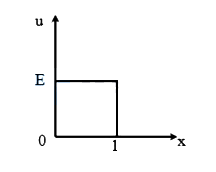
- The P.E. ' \(U\) ' of a moving particle of mass ' \(m\) ' varies with ' \(\mathrm{x}\) ' is shown in the figure. The de-Broglie wavelength of the particle in the regions \(0 \leq x \leq 1\) and \(x>1\) are \(\lambda_1\) and \(\lambda_2\) respectively. If the total energy of the particle is ' \(\mathrm{nE}\) ', then the ratio \(\lambda_1 / \lambda_2\) is
 MHT CET 2021 Hard