


MHT CET · Chemistry · Chemical Kinetics
What is the rate of disappearance of B in following reaction? \(2 \mathrm{~A}+\mathrm{B} \rightarrow 3 \mathrm{C}\), if rate of appearance of \(\mathrm{C}\) is \(1.3 \times 10^{-4} \mathrm{~mol} \mathrm{~L}^{-1} \mathrm{~s}^{-1}\).
- A \(4.33 \times 10^{-5} \mathrm{~mol} \mathrm{~L}^{-1} \mathrm{~s}^{-1}\)
- B \(8.6 \times 10^{-5} \mathrm{~mol} \mathrm{~L}^{-1} \mathrm{~s}^{-1}\)
- C \(2.6 \times 10^{-4} \mathrm{~mol} \mathrm{~L}^{-1} \mathrm{~s}^{-1}\)
- D \(5.2 \times 10^{-5} \mathrm{~mol} \mathrm{~L}^{-1} \mathrm{~s}^{-1}\)
Answer & Solution
Correct Answer
(A) \(4.33 \times 10^{-5} \mathrm{~mol} \mathrm{~L}^{-1} \mathrm{~s}^{-1}\)
Step-by-step Solution
Detailed explanation
\(\frac{\text { Rate of disappearance of B }}{1}=\frac{\text { Rate of appearance of } \mathrm{C}}{3}\)
Rate of disappearance of B \(=\frac{1}{3} \times 1.3 \times 10^{-4}\)
\(=4.33 \times 10^{-5} \mathrm{~mol} \mathrm{~L}^{-1} \mathrm{~s}^{-1}\)
Rate of disappearance of B \(=\frac{1}{3} \times 1.3 \times 10^{-4}\)
\(=4.33 \times 10^{-5} \mathrm{~mol} \mathrm{~L}^{-1} \mathrm{~s}^{-1}\)
See the Complete Solution
Get step-by-step explanations for this and 2.5 Lakh+ more JEE, NEET & CET questions.
- Unlock all solutions
- Practice the full chapter
- Track accuracy across PYQs
4.8 rated on Google Play · 14,000+ reviews
More questions from Chemistry
- An ideal gas expands from \(1 \times 10^{-3} \mathrm{~m}^{3}\) to \(1 \times 10^{-2} \mathrm{~m}^{3}\) at \(300 \mathrm{~K}\) against a constant external pressure of \(1 \times 10^{5} \mathrm{~nm}^{-2}\), work done isMHT CET 2020 Easy
- What is the internal energy change when \(X J\) of work is done on the system and \(Y J\) of heat is transferred to surrounding?MHT CET 2022 Medium
- Which from following elements is NOT radioactive?MHT CET 2023 Easy
- Which from following d-orbitals has different shape as compared with others?MHT CET 2025 Easy
- Cumene on air oxidation in presence of co-naphthenate formsMHT CET 2022 Medium
- Which of the following reaction does NOT involve replacement of diazonium group?MHT CET 2020 Medium
More PYQs from MHT CET
- A thin metal wire of length ' \(L\) ' and mass ' \(M\) ' is bent to form semicircular ring as shown. The moment of inertia about \(\mathrm{XX}^1\) is
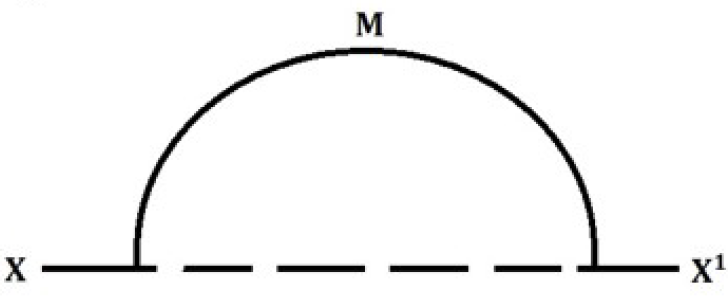 MHT CET 2025 Medium
 - If a complex number \(\mathrm{z}=\frac{4+3 i \sin \theta}{1-2 i \sin \theta}(\) where \(i=\sqrt{-1})\) is purely real, then the value of \(\theta\) isMHT CET 2025 Medium
- If \(\mathrm{p}\) : It is raining and \(\mathrm{q}\) It is pleasant, then the symbolic from of "It is neither raining nor pleasant" isMHT CET 2021 Easy
- Two adjacent of sides parallelogram \(\mathrm{ABCD}\) are given by \(\overline{\mathrm{AB}}=2 \hat{i}+10 \hat{j}+11 \hat{k}\) and \(\overline{\mathrm{AD}}=-\hat{\mathrm{i}}+2 \hat{\mathrm{j}}+2 \hat{\mathrm{k}}\). The side \(\mathrm{AD}\) is rotated by angle \(\alpha\) in plane of parallelogram so that \(\mathrm{AD}\) becomes \(\mathrm{AD}^{\prime}\). If \(\mathrm{AD}^{\prime}\) makes a right angle with the side \(A B\), then the cosine of the angle \(\alpha\) is given byMHT CET 2023 Hard
- A single slit diffraction pattern is formed with white light. For what wavelength of light, the \(3^{\text {rd }}\) secondary maximum in diffraction pattern coincides with the \(2^{\text {nd }}\) secondary maximum in the pattern of red light of wavelength \(6000 Å\) ?MHT CET 2021 Medium
- What is vapour pressure of a solution when \(2 \mathrm{~mol}\) of a non-volatile solute are dissolved in \(20 \mathrm{~mol}\) of water? \(\left(\mathrm{P}_1^{\circ}=32 \mathrm{~mm} \mathrm{Hg}\right)\)MHT CET 2021 Medium