


MHT CET · Chemistry · Chemical Bonding and Molecular Structure
The bond length of \(\mathrm{C}-\mathrm{F}\) in \(\mathrm{CH}_3-\mathrm{F}\) molecule is
- A \(178 \mathrm{pm}\)
- B 139 pm
- C \(214 \mathrm{pm}\)
- D \(193 \mathrm{pm}\)
Answer & Solution
Correct Answer
(B) 139 pm
Step-by-step Solution
Detailed explanation
Theory based.
See the Complete Solution
Get step-by-step explanations for this and 2.5 Lakh+ more JEE, NEET & CET questions.
- Unlock all solutions
- Practice the full chapter
- Track accuracy across PYQs
4.8 rated on Google Play · 14,000+ reviews
More questions from Chemistry
- What is the cell constant, if two platinum electrodes in conductivity cell are separated by 0.92 cm and area of cross section is \(1.2 \mathrm{~cm}^2\) ?MHT CET 2024 Easy
- Two moles of an ideal gas is expanded isothermally from a volume of \(300 \mathrm{~cm}^3\) to 2.5 \(\mathrm{dm}^3\) at 298 K against a constant pressure at 1.9 bar. Calculate the work done in joules.MHT CET 2024 Easy
- Which element from following exhibits diagonal relationship with beryllium?MHT CET 2023 Easy
- Which among the following elements is a soft element as compared to othersMHT CET 2020 Easy
- Which group from following is responsible for (-)R effect?MHT CET 2021 Easy
- What is IUPAC name of following compound?
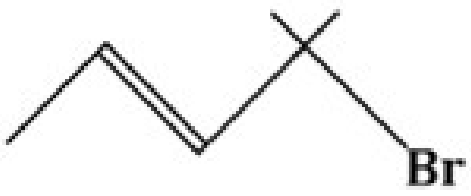 MHT CET 2025 Easy
More PYQs from MHT CET
- How many isomers of \(\mathrm{C}_4 \mathrm{H}_{11} \mathrm{~N}\) are secondary amines?MHT CET 2024 Medium
- A particle \(P\) starts from the point \(Z_0=1+2 i\) where \(i=\sqrt{-1}\). It moves first horizontally away from the origin by 5 units and then vertically upwards parallel to positive \(y\)-axis by 3 units to reach a point \(Z_1\). From \(Z_1\) the particle moves \(\sqrt{2}\) units in the direction of vector \(\hat{i}+\hat{j}\) and then it moves through an angle \(\frac{\pi}{2}\) in anticlockwise direction on a circle with centre at origin to reach at point \(Z_2\), then \(Z_2=\)MHT CET 2025 Medium
- If rate of reaction is given as \(\frac{1}{3} \frac{\mathrm{d}[\mathrm{x}]}{\mathrm{dt}}=-\frac{1}{2} \frac{\mathrm{d}[\mathrm{y}]}{\mathrm{dt}}=-\frac{\mathrm{d}[\mathrm{Z}]}{\mathrm{dt}}\), the reaction can be represented asMHT CET 2022 Easy
- What is the oxidation number of carbon in glucose?MHT CET 2020 Easy
- Holandric genes are present on _________ .MHT CET 2020 Easy
- Which among the following concentration of \(\mathrm{KCl}\) solution is not used to determine cell constant of conductivity cell?MHT CET 2022 Medium