


MHT CET · Chemistry · General Organic Chemistry
Identify simple ether from the following.
- A Methoxyethane
- B Anisole
- C 1-propoxybenzene
- D Methoxymethane
Answer & Solution
Correct Answer
(D) Methoxymethane
Step-by-step Solution
Detailed explanation
\(\mathrm{CH}_3-\mathrm{O}-\mathrm{CH}_3\)
methoxy methane
simplest ether
methoxy methane
simplest ether
See the Complete Solution
Get step-by-step explanations for this and 2.5 Lakh+ more JEE, NEET & CET questions.
- Unlock all solutions
- Practice the full chapter
- Track accuracy across PYQs
4.8 rated on Google Play · 14,000+ reviews
More questions from Chemistry
- What is the IUPAC name of following compound?
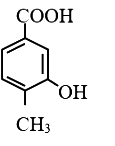 MHT CET 2022 Easy
 - What it the IUPAC name of following compounds?
 MHT CET 2025 Medium
 - Identify the product ' B ' in the following sequence of ractions.
Methyl magnesium bromide \(\xrightarrow{\mathrm{CdCl}_2} \mathrm{~A} \xrightarrow{\mathrm{CH}_3 \mathrm{COCl}} \mathrm{B}\)MHT CET 2025 Medium - What is IUPAC name of \(\left[\mathrm{CoCl}_{2}(\mathrm{en})_{2}\right]^{+} ?\)MHT CET 2020 Easy
- Which carbon atom of deoxy Ribose sugar in DNA does NOT contain the
 bond?MHT CET 2018 Medium
 - Which from following polymers is obtained by condensation polymerisation method?MHT CET 2025 Easy
More PYQs from MHT CET
- The value of \(\tan ^{-1}(-\sqrt{3})-\sin ^{-1}\left(\frac{1}{\sqrt{2}}\right)+\cos ^{-1}\left(\frac{-1}{2}\right)\) isMHT CET 2024 Easy
- Let the circle with centre at origin pass through the vertices of an equilateral triangle \(A B C\). If \(A \equiv(2,4)\), then the length of the median through A isMHT CET 2025 Medium
- The magnetic moment is NOT associated withMHT CET 2020 Easy
- The enzyme which converts maltose to glucose isMHT CET 2019 Easy
- \(\int \frac{\mathrm{e}^{\tan ^{-1} x}}{1+x^2}\left[\left(\sec ^{-1} \sqrt{1+x^2}\right)^2+\cos ^{-1}\left(\frac{1-x^2}{1+x^2}\right)\right] \mathrm{d} x, x>0=\)MHT CET 2023 Hard
- If \(\mathrm{f}(x)=\cos (\log x)\) then
\(\mathrm{f}\left(x^2\right) \cdot \mathrm{f}\left(\mathrm{y}^2\right)-\frac{1}{2}\left[\mathrm{f}\left(\frac{x^2}{\mathrm{y}^2}\right)+\mathrm{f}\left(x^2 \mathrm{y}^2\right)\right]\) has the valueMHT CET 2025 Medium