


MHT CET · Chemistry · Thermodynamics (C)
A monoatomic ideal gas, initially at temperature ' \(\mathrm{T}_1\) ' is enclosed in a cylinder fitted with a frictionless piston. The gas is allowed to expand adiabatically to a temperature ' \(\mathrm{T}_2\) ' by releasing the piston suddenly \(L_1\) and \(L_2\) are the lengths of the gas columns before and after the expansion respectively. The \(\frac{\mathrm{T}_2}{\mathrm{~T}_1}\) is
- A \(\left[\frac{\mathrm{L}_1}{\mathrm{~L}_2}\right]^{2 / 3}\)
- B \(\left[\frac{\mathrm{L}_1}{\mathrm{~L}_2}\right]^{1 / 2}\)
- C \(\left[\frac{\mathrm{L}_2}{\mathrm{~L}_1}\right]^{1 / 2}\)
- D \(\left[\frac{\mathrm{L}_2}{\mathrm{~L}_1}\right]^{2 / 3}\)
Answer & Solution
Correct Answer
(A) \(\left[\frac{\mathrm{L}_1}{\mathrm{~L}_2}\right]^{2 / 3}\)
Step-by-step Solution
Detailed explanation
In an adiabatic process \(\mathrm{T}_1 \mathrm{~V}_1^{-1}=\mathrm{T}_2 \mathrm{~V}_2^{-1}\)
For an ideal mono atomic gas the no of degree of freedom is 3
\(
\begin{aligned}
& \mathrm{Y}=1+\frac{2}{\mathrm{f}}=1+\frac{2}{3} \\
& \frac{\mathrm{T}_1}{\mathrm{~T}_2}=\left(\frac{\mathrm{V}_2}{\mathrm{~V}_1}\right)^{\mathrm{Y}-1}=\left(\frac{\mathrm{V}_2}{\mathrm{~V}_1}\right)^{2 / 3}=\left(\frac{\mathrm{L}_2}{\mathrm{~L}_1}\right)^{2 / 3}
\end{aligned}
\)
Since volume is proportional to length due to area being constant.
For an ideal mono atomic gas the no of degree of freedom is 3
\(
\begin{aligned}
& \mathrm{Y}=1+\frac{2}{\mathrm{f}}=1+\frac{2}{3} \\
& \frac{\mathrm{T}_1}{\mathrm{~T}_2}=\left(\frac{\mathrm{V}_2}{\mathrm{~V}_1}\right)^{\mathrm{Y}-1}=\left(\frac{\mathrm{V}_2}{\mathrm{~V}_1}\right)^{2 / 3}=\left(\frac{\mathrm{L}_2}{\mathrm{~L}_1}\right)^{2 / 3}
\end{aligned}
\)
Since volume is proportional to length due to area being constant.
See the Complete Solution
Get step-by-step explanations for this and 2.5 Lakh+ more JEE, NEET & CET questions.
- Unlock all solutions
- Practice the full chapter
- Track accuracy across PYQs
4.8 rated on Google Play · 14,000+ reviews
More questions from Chemistry
- Identify the products of following reaction:
\(
\mathrm{C}_6 \mathrm{H}_5 \mathrm{COOC}_2 \mathrm{H}_5 \underset{\text { dil. } \mathrm{H}_2 \mathrm{SO}_4}{\longrightarrow}
\)MHT CET 2021 Medium - Calculate the work done in kJ when 3 moles of an ideal gas at \(27^{\circ} \mathrm{C}\) expand isothermally and reversibly from 10 atm . to \(1 \mathrm{~atm}\left[\mathrm{R}=8.314 \mathrm{~J} \mathrm{~K}^{-1} \mathrm{~mol}^{-1}\right]\)MHT CET 2025 Medium
- What are and in the following reaction?
Pent - - eneMHT CET 2023 Easy - Calculate the number of atoms present per unit cell if product of density and volume of unit cell is \(1.8 \times 10^{-22} \mathrm{~g}\)
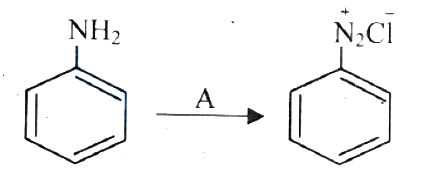
[Mass of an atom \(=4.5 \times 10^{-23} \mathrm{~g}\)]MHT CET 2025 Medium - Identify reagent ' \(A\) ' used in the following reaction?
 MHT CET 2024 Easy
 - What is the number of moles of donor atoms - present in one mole oxalate ion?MHT CET 2024 Easy
More PYQs from MHT CET
- If \(y=2^{a x}\) and \(\left(\frac{d y}{d x}\right)_{x=1}=\log 256\), then \(a=\)MHT CET 2020 Easy
- An experiment succeeds twice as often as it fails. Then the probability, that in the next 6 trials there will be atleast 4 successes, isMHT CET 2023 Easy
- Calcite crystals used in Nicol's prism are formed ofMHT CET 2020 Easy
- A shell is fired at an angle of \(30^{\circ}\) to the horizontal with velocity \(196 \mathrm{~m} / \mathrm{s}\). The time of flight is \(\left[\sin 30^{\circ}=\frac{1}{2}=\cos 60^{\circ}\right]\)MHT CET 2022 Easy
- With usual notations in \(\Delta \mathrm{ABC}, \mathrm{a}=3, \mathrm{c}=2\) and \(\sin \mathrm{C}=\frac{2}{3}\), then \(\angle \mathrm{A}=\)MHT CET 2020 Easy
- The particular solution of the differential equation \(y(1+\log x) \frac{d x}{d y}-x \log x=0\) whenMHT CET 2016 Hard