


KCET · Maths · Binomial Theorem
If \(r\) th and \((r+1)\) th terms in the expansion of \((p+q)^{n}\) are equal, then \(\frac{(n+1) q}{r(p+q)}\) is
- A 0
- B 1
- C \(\frac{1}{4}\)
- D \(\frac{1}{2}\)
Answer & Solution
Correct Answer
(B) 1
Step-by-step Solution
Detailed explanation
Given, \((p+q)^{n}\)
\[
T_{r}=T_{(r-1)+1}={ }^{n} C_{r-1} p^{n-r+1} \cdot q^{r-1}
\]
and
\[
T_{r+1}={ }^{n} C_{r} p^{n-r} \cdot q^{r}
\]
From question,
\({ }^{n} C_{r-1} p^{n-r+1} \cdot q^{r-1}={ }^{n} C_{r} p^{n-r} \cdot q^{r}\)
\(\frac{n !}{(r-1) !(n-r+1)(n-r) !} \cdot p^{n-r} q^{r} \cdot \frac{p}{q}\)
\(=\frac{n !}{r(r-1) !(n-r) !} \cdot p^{n-r} \cdot q^{r}\)
\(\Rightarrow \quad \frac{1}{(n-r+1)} \cdot \frac{p}{q}=\frac{1}{r}\)
\(\Rightarrow \quad p r=q n-q r+q\)
\(\Rightarrow \quad \frac{q(n+1)}{r(p+q)}=1\)
\[
T_{r}=T_{(r-1)+1}={ }^{n} C_{r-1} p^{n-r+1} \cdot q^{r-1}
\]
and
\[
T_{r+1}={ }^{n} C_{r} p^{n-r} \cdot q^{r}
\]
From question,
\({ }^{n} C_{r-1} p^{n-r+1} \cdot q^{r-1}={ }^{n} C_{r} p^{n-r} \cdot q^{r}\)
\(\frac{n !}{(r-1) !(n-r+1)(n-r) !} \cdot p^{n-r} q^{r} \cdot \frac{p}{q}\)
\(=\frac{n !}{r(r-1) !(n-r) !} \cdot p^{n-r} \cdot q^{r}\)
\(\Rightarrow \quad \frac{1}{(n-r+1)} \cdot \frac{p}{q}=\frac{1}{r}\)
\(\Rightarrow \quad p r=q n-q r+q\)
\(\Rightarrow \quad \frac{q(n+1)}{r(p+q)}=1\)
See the Complete Solution
Get step-by-step explanations for this and 2.5 Lakh+ more JEE, NEET & CET questions.
- Unlock all solutions
- Practice the full chapter
- Track accuracy across PYQs
4.8 rated on Google Play · 14,000+ reviews
More questions from Maths
- If \([x]\) is the greatest integer function not greater than \(x\), then \(\int_0^8[x] d x\) is equal toKCET 2022 Medium
- \(\int xf(x)\,dx + \dfrac{f(x)}{2} = 0\), then \(f(x)\) is equal toKCET 2026 Medium
- The maximum volume of the right circular cone with slant height 6 units isKCET 2024 Medium
- If \(\mathbf{a}, \mathbf{b}\) and \(\mathbf{c}\) are non-coplanar, then the value of \(\mathbf{a} \cdot\left\{\frac{\mathbf{b} \times \mathbf{c}}{3 \mathbf{b} \cdot(\mathbf{c} \times \mathbf{a})}\right\}-\mathbf{b} \cdot\left\{\frac{\mathbf{c} \times \mathbf{a}}{2 \mathbf{c} \cdot(\mathbf{a} \times \mathbf{b})}\right\}\) isKCET 2011 Medium
- \(\int_0^\pi \frac{x \tan x}{\sec x \cdot \operatorname{cosec} x} d x\) is equals toKCET 2023 Medium
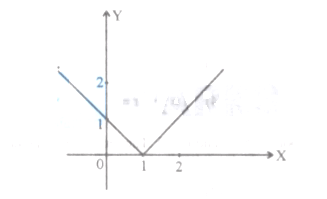
- The function represented by the following graph is,
 KCET 2014 Hard
More PYQs from KCET
- \(\lim _{n \rightarrow \infty}\left(\frac{n}{n^2+1^2}+\frac{n}{n^2+2^2}+\frac{n}{n^2+3^2}+\ldots+\frac{1}{5 n}\right)=\)KCET 2024 Hard
- Among the following, the main reactions occurring in blast furnace during extraction of iron from haematite are:
i. \(\mathrm{Fe}_{2} \mathrm{O}_{3}+3 \mathrm{CO} \rightarrow 2 \mathrm{Fe}+3 \mathrm{CO}_{2}\)
ii. \(\mathrm{FeO}+\mathrm{SiO}_{2} \rightarrow \mathrm{FeSiO}_{3}\)
iii. \(\mathrm{Fe}_{2} \mathrm{O}_{3}+3 \mathrm{C} \rightarrow 2 \mathrm{Fe}+3 \mathrm{CO}\)
iv. \(\mathrm{CaO}+\mathrm{SiO}_{2} \rightarrow \mathrm{CaSiO}_{3}\)KCET 2019 Medium - A motor pump lifts \( 6 \) tonnes of water from a well of depth \( 25 \mathrm{~m} \) to the first floor of height \( 35 \mathrm{~m} \)
from the ground floor in \( 20 \) minutes. The power of the pump (in \( \mathrm{kW} \) ) is: \( \left[\mathrm{g}=10 \mathrm{~ms}^{-2}\right] \)KCET 2017 Medium - In a lift moving up with an acceleration of \(5 \mathrm{~ms}^{-2}\), a ball is dropped from a height of \(1.25 \mathrm{~m}\). The time taken by the ball to reach the floor of the lift is ... (nearly) \(\left(g=10 \mathrm{~ms}^{-2}\right)\)KCET 2013 Medium
- If the determinant of the adjoint of a (real) matrix of order 3 is 25 , then the determinant of the inverse of the matrix isKCET 2013 Easy
- Which one of the following ecosystem has the highest annual net primary productivity?KCET 2019 Medium