


KCET · Chemistry · Surface Chemistry
The stability of a lyophobic colloid is due to
- A adsorption of covalent molecules on the colloid
- B the size of the particles
- C the charge on the particles
- D Tyndall effect
Answer & Solution
Correct Answer
(C) the charge on the particles
Step-by-step Solution
Detailed explanation
The stability of a lyophobic colloidal solution is due to the fact that the colloidal particles in the sol are electrically charged. The particles, therefore repel one another and do not coalesce (come close together) to form large non-colloidal particles Colloidal particles carry either positive or negative charge. All the dispersed particles in a colloidal solution carry the same charge while the dispersion medium has an equal and opposite charge.
See the Complete Solution
Get step-by-step explanations for this and 2.5 Lakh+ more JEE, NEET & CET questions.
- Unlock all solutions
- Practice the full chapter
- Track accuracy across PYQs
4.8 rated on Google Play · 14,000+ reviews
More questions from Chemistry
- When \(\mathrm{O}_{2}\) is converted into \(\mathrm{O}_{2}^{+}\)KCET 2011 Easy
- Sucrose is dextrorotatory but after hydrolysis the mixture show laevorotation, this is because ofKCET 2023 Medium
- Which of the following element forms \( p \Pi-p_{\Pi} \) bond with itself ?KCET 2017 Easy
- The amount of heat evolved when \(500 \mathrm{~cm}^{3}\) of \(0.1 \mathrm{M} \mathrm{HCI}\) is mixed with \(200 \mathrm{~cm}^{3}\) of \(0.2 \mathrm{M}\) \(\mathrm{NaOH}\) isKCET 2010 Easy
- Plot of Maxwell's distribution of velocities is given below :
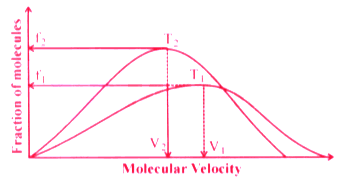
which of the following is correct about this plot?KCET 2015 Easy - A first order reaction is half completed in \(45 \mathrm{~min}\). How long does it need \(99.9 \%\) of the reaction to be completed ?KCET 2022 Medium
More PYQs from KCET
- A dibromo derivative of an alkane reacts with sodium metal to form an alicyclic hydrocarbon. The derivative isKCET 2010 Medium
- More men suffer from colour blindness than women becauseKCET 2011 Easy
- A crystalline solid \( \mathrm{X} \) reacts with dil. \( \mathrm{HCl} \) to liberate a gas \( \mathrm{Y} . \mathrm{Y} \) decolourises acidified \( \mathrm{KMnO}_{4} \).
When a gas ' \( Z \) ' is slowly passed into an aqueous solution of \( Y \), colloidal sulphur is obtained. \( X \)
and \( Z \) could be, respectivelyKCET 2014 Medium - Arrange the following in the increasing order of their basic strengths \(\mathrm{CH}_{3} \mathrm{NH}_{2},\left(\mathrm{CH}_{3}\right)_{2} \mathrm{NH}\), \(\left(\mathrm{CH}_{3}\right)_{3} \mathrm{~N}, \mathrm{NH}_{3}\)KCET 2009 Easy
- \( \int_{0}^{1} \sqrt{\frac{1+x}{1-x}} d x= \)KCET 2019 Medium
- \(\mathrm{CH}_{3} \mathrm{CH}_{2} \mathrm{Br} \underset{\Delta}{\stackrel{\mathrm{aq} \cdot \mathrm{KOH}}{\longrightarrow}} \mathrm{A} \underset{\Delta}{\stackrel{\mathrm{KMnO}_{4} / \mathrm{H}^{+}}{\longrightarrow}}\)
\(\mathrm{B} \underset{\Delta}{\stackrel{\mathrm{NH}_{3}}{\longrightarrow}} \mathrm{C} \underset{\text { alkali }}{\stackrel{\mathrm{Br}_{2}}{\longrightarrow}} \mathrm{D,}\) 'D' isKCET 2010 Easy