


CUET · MATHS · PYQ PAPER 2023
The points on the curve \(2 x=y^2\) which are nearest to the point \((5,0)\) lie in
A. I Quadrant
B. II Quadrant
C. III Quadrant
D. IV Quadrant
Choose the correct answer from the options given below:
- A A, B only
- B B, C only
- C C, D only
- D A, D only
Answer & Solution
Correct Answer
(D) A, D only
Step-by-step Solution
Detailed explanation
\(D^2 = (x-5)^2 + y^2\) \(x = \frac{y^2}{2}\) \(D^2(y) = \left(\frac{y^2}{2}-5\right)^2 + y^2\) \(\frac{d(D^2)}{dy} = 2\left(\frac{y^2}{2}-5\right)(y) + 2y = y(y^2-10)+2y = y^3-8y\) \(y^3-8y = 0 \Rightarrow y(y^2-8)=0 \Rightarrow y=0, y=\pm\sqrt{8} = \pm 2\sqrt{2}\) If \(y=0\),…
See the Complete Solution
Get step-by-step explanations for this and 2.5 Lakh+ more JEE, NEET & CET questions.
- Unlock all solutions
- Practice the full chapter
- Track accuracy across PYQs
4.8 rated on Google Play · 14,000+ reviews
More questions from MATHS
- If \(A\) and \(B\) are invertible matrices of same order, then which one of the following is NOT true?CUET 2025 Easy
- A book consisting of 2000 pages has 540 misprints distributed randomly throughout the book. The average number of misprints in one page of the book is:CUET 2023 Hard
- The number of one - one functions from \(A=\{1,2,3,4\}\) to itself is:CUET 2023 Easy
- The value of the integral \(I=\int_{-3}^3\left(x^3-x\right) d x\) is :CUET 2023 Hard
- Consider the LPP: Max \(Z = 5x + 3y\) subject to \(3x + 5y ≤ 15, 5x + 2y ≤ 10 x ≥ 0, y ≥ 0\)
match List - I with List - II
Choose the correct answert from the option given below :List-I List-II (A) Objective function (I) \(3x + 5y ≥ 15\) (B) One constraint (II) \(x, y ≥ 0\) (C) Non-negative restrictions (III) \(Z = 5x + 3y\) (D) Point (1, 2) does not lie in the region (IV) \(3x + 5y ≤ 15\) CUET 2025 Hard - Given differential equation,
\(\left(1+y^2\right) d x=\left(\tan ^{-1} y-x\right) d y\)
then which of the following is/are true?
(A) Integrating factor \(=\tan ^{-1} x\)
(B) Integrating factor \(=\tan ^{-1} y\)
(C) Integrating factor \(=e^{\tan ^{-1} y}\)
(D) Degree \(=1\)
Choose the correct answer from the options given below :CUET 2025 Hard
More PYQs from CUET
-
List-I (Reaction Name) List-II (Reaction) (A) Carbylamine reaction (I) 
(B) Gatterman Rection (II) 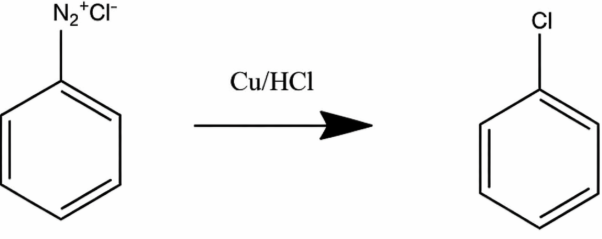
(C) Sandmeyer reaction (III) 
(D) Hoffmann Bromamide reaction (IV) 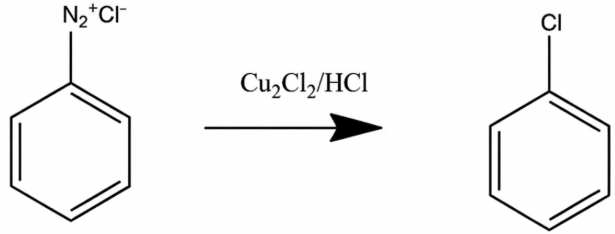
Choose the correct answer from the options given below:CUET 2025 Hard - The differential equation for \(y=A \cos (\alpha x)+B \sin (\alpha x)\), where A and B are arbitrary constants is:CUET 2023 Hard
- Answer the question on the basis of passage given below :
For the transition elements
Sc \(\quad\) Ti \(\quad\) V \(\quad\) Cr \(\quad\) Mn\(\quad\) Fe \(\quad\) Co \(\quad\) Ni \(\quad\) Cu \(\quad\) Zn
Atomic numbers :
21 \(\quad\) 22 \(\quad\) 23 \(\quad\) 24 \(\quad\) 25 \(\quad\) 26 \(\quad\) 27 \(\quad\) 28 \(\quad\) 29 \(\quad\) 30 \(\quad\)
Which transition metal has the greatest number of oxidation state?CUET 2023 Easy - \(\mathrm{Cr}_2 \mathrm{O}_7^{2-}\) dissolves in aqueous NaOH to give:CUET 2025 Medium
- Match List I with List II
Choose the correct answer from the options given below:LIST - I LIST - II A. Zone refining I. Titanium B. Mond's process II. Zinc C. Electrolytic refining III. Nickel D. van-Arkel method IV. Germanium CUET 2023 Hard - \(\int_{\frac{\pi}{6}}^{\frac{\pi}{3}} \frac{d x}{1+\sqrt{\tan x}}\) is equal to:CUET 2025 Hard