


CUET · CHEMISTRY · PYQ PAPER 2023
Which one of the following is most reactive towards substitution nucleophilic unimolecular (\(\text{S}_1\)) reactions?
- A \(\text{C}_6\text{H}_5\text{CH}(\text{C}_6\text{H}_5)\text{Br}\)
- B \(\text{C}_6\text{H}_3\text{CH}(\text{Br})\text{CH}_3\)
- C \(\text{C}_6\text{H}_5\text{C}(\text{CH}_3)(\text{C}_6\text{H}_5)\text{Br}\)
- D C6H5CH2Br
Answer & Solution
Correct Answer
(C) \(\text{C}_6\text{H}_5\text{C}(\text{CH}_3)(\text{C}_6\text{H}_5)\text{Br}\)
Step-by-step Solution
Detailed explanation
S\(_{\text{N}}\)1 reactivity depends on carbocation stability. Stability order: Tertiary > Secondary > Primary; enhanced by resonance. \(\text{C}_6\text{H}_5\text{C}^{+}(\text{CH}_3)(\text{C}_6\text{H}_5)\) is tertiary, stabilized by two phenyl groups and a methyl group, making…
See the Complete Solution
Get step-by-step explanations for this and 2.5 Lakh+ more JEE, NEET & CET questions.
- Unlock all solutions
- Practice the full chapter
- Track accuracy across PYQs
4.8 rated on Google Play · 14,000+ reviews
More questions from CHEMISTRY
- The degree of dissociation ( \(\alpha\) ) of a weak electrolyte \(A_x B_y\) is related to the van't Hoff factor (i) by the expression:CUET 2025 Hard
- Read the Passage carefully and answer the questions
When a ligand is bound to a metal ion through a single donor atom, it is said to be a unidentate ligand but when it bind through two donor atoms, then it is said to be didentate ligand and when several donor atoms are present in a single ligand, it is said to be a polydentate ligand. When a di- or polydentate ligand uses its two or more donor atoms simultaneously to bind a single metal ion, it is said to be a chelate ligand. The number of such ligating groups is called the denticity of the ligand. ligand which has two different donor atoms and either of the two ligetes in the complex is called ambidentate ligands. The number of ligand donor atoms to which the metal is directly bonded, is called coordination number of the metal ion in the complex. Complexes in which a metal is bound to only one kind of donor groups are known as homoleptic and in which a metal is bound to more than one kind of donor groups are known as heteroleptic complexes.
To make an octahesral complex of \(Mg ^{2+}\) ion, how many molecules of \(EDTA\) are used?CUET 2025 Medium - Read the passage carefully and answer the Questions
Werner in 1898, propounded his theory of coordination compounds. In coordination compounds metals show two types of linkages (valences)-primary and secondary. The primary valences are normally ionisable and are satisfied by negative ions. The secondary valences are non-ionisable. These are satisfied by neutral molecules or negative ions. The secondary valence is equal to the coordination number and is fixed for a metal. The ions or group bound by the secondary linkages to the metal have characteristic spatial arrangements corresponding to the different coordination numbers. Both double salts as well as complexes are formed by the combination of two or more stable compounds in stoichiometric ratio. However, they differ in the fact that double salts such as carnallite, Mohr's salt, potash alum etc. dissociate into simple ions completely when dissolved in water. But complex ions do not dissociate completely into simple ions.
When \(1 mol CrCl _3 \cdot 6 H _2 O\) is treated with excess of \(AgNO _3, 3 mol\) of AgCl are obtained. The formula of the complex is:CUET 2025 Hard - Curium (Cm) belongs to 5f series. Its atomic number is 96. Which of the following is the correct electronic configuration of Curium?CUET 2025 Hard
- The decomposition of hydrogen peroxide follows the equation:
\(K=\left(2.9 \times 10^{14} s^{-1}\right) e^{-2 \mu o p}\)
The value of Ea is:CUET 2023 Hard - Transition metals form a large number of complexes or coordination compounds in which the metal atoms are bound to a number of anions or neutral molecules. The valence bond theory explain the formation, magnetic behaviour and geometrical shapes while the crystal field theory explains the effect of different crystal fields on the degeneracy of d-orbitals energies of the central metal atom/ion. This provides for the quantitative estimation of orbital separation energies, magnetic moments and spectral and stability parameters.
Two complexes of nickel have same geometry but different magnetic behaviour are:
(A) \(\text{[Ni(CN)}_4]^{2-}\)
(B) \(\text{[Ni(CO)}_4]\)
(C) \(\text{[NiCl}_4]^{2-}\)
(D) \(\text{[Ni(NH}_3)_6]^{2+}\)
Choose the correct answer from the options given below :CUET 2023 Hard
More PYQs from CUET
- The velocity of light in a medium depends onCUET 2025 Hard
- Select the Lanthanoids which show +2 oxidation state?
(A) Yb
(B) Ce
(C). Eu
(D) Ho
Choose the correct answer from the options given below:CUET 2025 Easy - A magnet of magnetic moment \( 50 \hat{i} \text{ A m}^2 \) is placed along the X-axis in a magnetic field \( \vec{B} = (0.5 \hat{i} + 3.0 \hat{j}) \text{ T} \). The torque acting on it isCUET 2023 Hard
- In process of froth floatation, which is used for the removing gangue from sulphide ores. Depressant used is :CUET 2023 Easy
- An aqueous solution of glucose is labelled as 20% w/w. If the density of the solution is 1.2 g/mL the molality of the solution.CUET 2023 Hard
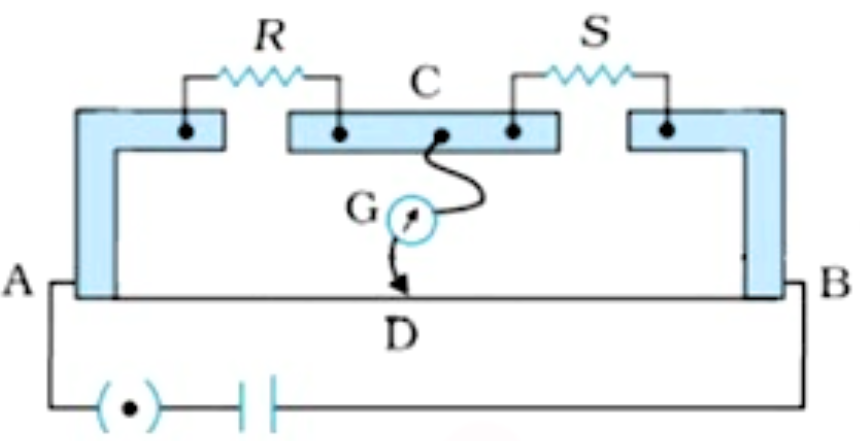
- In a meter bridge, the null point is found at a distance of 60 cm from end A. If a \( 5 \text{ } \Omega \) resistor is now connected in series with S, the null point occurs at 50 cm. The values of R and S are, respectively
 CUET 2025 Hard