


CUET · CHEMISTRY · PYQ PAPER 2023
Vapour pressure of \(\text{CHCl}_3\) and \(\text{CH}_2\text{Cl}_2\) at 298 K are 200 mmHg and 415 mmHg respectively.
Calculate the vapour pressure of the solution prepared by mixing 25.5 g of \(\text{CHCl}_3\) and 40 g of \(\text{CH}_2\text{Cl}_2\) at 298 K.
- A 308.2 mmHg
- B 297.4 mmHg
- C 327.6 mmHg
- D 347.9 mmHg
Answer & Solution
Correct Answer
(D) 347.9 mmHg
Step-by-step Solution
Detailed explanation
\(n_{\text{CHCl}_3} = \frac{25.5 \text{ g}}{119.5 \text{ g/mol}} = 0.2134 \text{ mol}\) \(n_{\text{CH}_2\text{Cl}_2} = \frac{40 \text{ g}}{85 \text{ g/mol}} = 0.4706 \text{ mol}\) \(X_{\text{CHCl}_3} = \frac{0.2134}{0.2134 + 0.4706} = \frac{0.2134}{0.6840} = 0.3120\)…
See the Complete Solution
Get step-by-step explanations for this and 2.5 Lakh+ more JEE, NEET & CET questions.
- Unlock all solutions
- Practice the full chapter
- Track accuracy across PYQs
4.8 rated on Google Play · 14,000+ reviews
More questions from CHEMISTRY
- The carbohydrate metabolism and modulation of inflammatory reactions are controlled by which hormone ?CUET 2023 Medium
- Read the passage carefully and answer the Questions
Aldehydes and ketones are important organic compounds prepared mainly by oxidation of alcohols. Primary alcohols give aldehyde and secondary alcohols yield ketones. Aldehydes can also be formed by partial reduction of acid chlorides, reduction of esters or by Gattermann-Koch reaction. Ketones are prepared by Friedel-Craft's acylation, hydration of alkyne and reaction of Grignard's reagent with nitriles. Chemically, aldehydes and ketones are reactive in nature due to the carbonyl group and undergo nucleophilic addition reactions. Aldehydes are more reactive than ketones and can be oxidized to carboxylic acids, while both can be reduced to alcohols or hydrocarbons and exhibit condensation reaction.
When two moles of benzaldehyde are heated with concentrated NaOH solution, the product/s obtained is/are:CUET 2025 Hard - Type of RNA which does not exist isCUET 2025 Hard
- Match List-I with List-II
List-I (Reaction) List-II (Name) (A) \({CH}_3 {CHO}+{Dil} {NaOH} \longrightarrow {CH}_3 {CHOHCH}_2 {CHO}\) (I) Aldol Reaction (B) \({CH}_3 {CH}_3 {CH}_2 {COOH}+{Br}_2 \xrightarrow[\text { (ii) } {H}_2 {O}]{\text { (i)Red P }} {CH}_2 {CH}_2 {CHBrCOOH}\) (II) Cannizzaro Reaction (C) \({C}_6 {H}_5 {CHO}+\) Conc. \({KOH} \longrightarrow {C}_6 {H}_5 {COONa}+{C}_6 {H}_5 {CH}_2 {OH}\) (III) Haloform Reaction (D) \({CH}_3 {COCH}_3 \xrightarrow{{NaOCl}} {CH}_3 {COONa}+{CHCl}_3\) (IV) Hell Volhard Zelinski Reaction
Choose the correct answer from the options given below:CUET 2025 Medium - Match List I with List II
Choose the correct answer from the options given below :List-l (Name of compound) List-II (Structure) (A). Resorcinol
(I).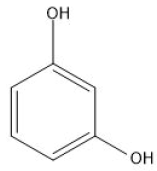
(B). Catechol
(II).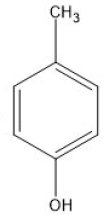
(C). Hydroquinone
(III).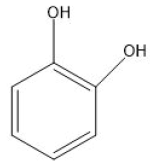
(D). p-Cresol
(IV).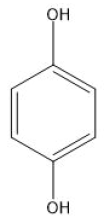 CUET 2023 Easy
 - Werner was the first to describe the bonding features in coordination compounds. But his theory could not answer basic questions like :
(i) Why only certain elements possess the remarkable property of forming coordination compounds ?
(ii) Why the bonds in coordination compounds have directional properties ?
(iii) Why coordination compounds have characteristics magnetic and optical properties ?
Many approaches have been put forth to explain the nature of bonding in coordination compounds viz. Valence Bond Theory (VBT), Crystal Field Theory (CFT), Ligand Field Theory (LFT) and Molecular Orbital Theory (MOT).
We shall focus our attention on elementary treatment of the application of VBT and CFT to coordination compounds.
According to this theory, the metal atom or ion under the influence of ligands can use its ( \(n -1\) )d, ns np or ns, np, nd orbitals for hybridisation to yield a set of equivalent orbitals of definite geometry such as octahedral, tetrahedral, square planar and so on.
These hybridised orbitals are allowed to overlap with ligand orbitals that can donate electron pairs for bonding.
The formula which correctly represents Potassium tetra hydroxo zincate (II) is :CUET 2023 Hard
More PYQs from CUET
- The factor(s) governing the flow of electricity through an electrolytic solution is/are
(A) The nature of inter-ionic attraction.
(B) Temperature
(C) Solvation of ions.
(D) The nature of solvent and its viscosity.
Choose the correct answer from the options given below:CUET 2025 Hard - Which are the correct statements from given below:
A. Kirchhoff's junction rule is based on conservation of charge
B. Current is a vector quantity.
C. Current density is a vector quantity.
D. Resistance doesn't depend on dimension of conductor.
E. Resistivity depends on temperature.CUET 2023 Easy - Which of the following step is not the part of downstream processing?CUET 2025 Medium
- The principal value of \(\cot ^{-1}\left(-\frac{1}{\sqrt{3}}\right)\) isCUET 2023 Hard
- Gabriel synthesis is used for the synthesis of:CUET 2025 Medium
- The value of \(\int_{\frac{-\pi}{2}}^{\pi / 2}\left(x^5+x^3 \cos x\right) d x\) is :CUET 2025 Easy