


CUET · CHEMISTRY · PYQ PAPER 2023
The cell reaction occurring at anode in the electrolysis of aqueous \(\text{NaCl}\) solution is :
- A \(\text{H}^{+}(\text{aq}) + \text{e}^{-} \rightarrow \frac{1}{2} \text{H}_2(\text{g})\), \(\text{E}_{\text{cell}} = 0.00\text{V}\)
- B \(\text{Cl}^{-}(\text{aq}) \rightarrow \frac{1}{2}\text{Cl}_2(\text{g})+\text{e}^{-}\), \(\text{E}_{\text{cell}} = 1.36\text{V}\)
- C \(\text{Na}^{+}(\text{aq}) + \text{e}^{-} \rightarrow \text{Na}(\text{s})\), \(\text{E}_{\text{cell}} = -2.71\text{V}\)
- D \(2\text{H}_2\text{O}(\text{l}) \rightarrow \text{O}_2(\text{g}) + 4\text{H}^{+}(\text{aq}) + 4\text{e}^{-}\), \(\text{E}_{\text{cell}} = 1.23\text{V}\)
Answer & Solution
Correct Answer
(B) \(\text{Cl}^{-}(\text{aq}) \rightarrow \frac{1}{2}\text{Cl}_2(\text{g})+\text{e}^{-}\), \(\text{E}_{\text{cell}} = 1.36\text{V}\)
Step-by-step Solution
Detailed explanation
\(\text{Cl}^{-}(\text{aq}) \rightarrow \frac{1}{2}\text{Cl}_2(\text{g})+\text{e}^{-}\), \(\text{E}_{\text{cell}} = 1.36\text{V}\)
See the Complete Solution
Get step-by-step explanations for this and 2.5 Lakh+ more JEE, NEET & CET questions.
- Unlock all solutions
- Practice the full chapter
- Track accuracy across PYQs
4.8 rated on Google Play · 14,000+ reviews
More questions from CHEMISTRY
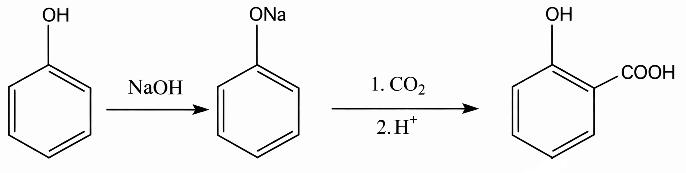
- Phenol reacts with sodium hydroxide and carbon dioxide in acidic medium to produce:CUET 2023 Hard
- The number of mono bromo structural isomers formed by free radical bromination of isopentane areCUET 2025 Easy
- The number of moles of hydrogen oxidized in the oxidation of 67.2 L of H 2 at STP is:CUET 2024 Medium
- Complete hydrolysis of DNA does not yieldCUET 2023 Medium
- Read the passage carefully and answer the Questions
According to Valence Bond theory, the metal atom or ion under the influence of ligands can use its ( \(n-1) d, n s, n p\) or \(n s, n p, n d\)orbitals for hybridisation to yield a set of equivalent orbitals of definite geometry such as octahedral, tetrahedral, square planar and so on. These hybridised orbitals are allowed to overlap with ligand orbitals that can donate electron pairs for bonding. While the VB theory, to a larger extent, explains the formation, structures and magnetic behaviour of coordination compounds, it suffers from the many shortcomings. The Crystal field theory (CFT) is an electrostatic model which considers the metal-ligand bond to be ionic arising purely from electrostatic interactions between the metal ion and the ligand. The five \(d\) orbitals in an isolated gaseous metal atom/ion have same energy, i.e., they are degenerate. This degeneracy is maintained if a spherically symmetrical field of negative charges surrounds the metal atom/ion. However, when this negative field is due to ligands in a complex, it becomes asymmetrical and the degeneracy of the \(d\) orbitals is lifted. It results in splitting of the \(d\) orbitals. The pattern of splitting depends upon the nature of the crystal field.
The spin only magnetic moment of \(\left[ MnBr _4\right]^{2-}\) is 5.9 BM. Predict the geometry of the complex ion?CUET 2025 Easy - The reaction for the conversion of phenol into salicylic acid is known as
 CUET 2023 Hard
More PYQs from CUET
- Which compound of transition metal is used as a catalyst in the Contact Process?CUET 2025 Medium
- Which of the following is/are not the factor(s) causing the poor health of a person?
(A) Genetic disorders
(B) Infections
(C) Intake of unbalanced diet and un-clean water
(D) Having good eating habits
Choose the correct answer from the options given below:CUET 2023 Hard - A current of \( 2 \times 10^{-5} \text{ A} \) produces 25 division deflection in a galvanometer. The resistance of the galvanometer coil is \( 4 \ \Omega \). The figure of merit of galvanometer is :CUET 2023 Hard
- Which of the following mendelian disorders are autosome-linked recessive traits?
(A) Thalassaemia
(B) Colour Blindness
(C) Phenylketonuria
(D) Haemophilia
Choose the correct answer from the options given below:CUET 2023 Easy - Sexual stages of Plasmodium which develop in human RBCs are known as:-CUET 2023 Medium
- The correct sequence of steps involved in polymerase chain reaction (PCR) are:
A. DNA polymerase is used to extends the primers using oligonucleotides.
B. Desired DNA fragments are denatured.
C. Amplified fragments are ligated with the vector for cloning.
D. Oligonucleotides are added
Choose the correct answer from the options given below:CUET 2023 Easy