


CUET · CHEMISTRY · PYQ PAPER 2025
Salicylaldehyde can be prepared by treating phenol with
- A CCl\(_4\) in presence of aqueous KOH
- B CO\(_2\) under pressure in the presence of sodium hydroxide solution.
- C NaNO\(_2\) and a few drops of concentrated H\(_2\)\(\mathrm{SO}_4\)
- D CHCl\(_3\) in the presence of aqueous NaOH
Answer & Solution
Correct Answer
(D) CHCl\(_3\) in the presence of aqueous NaOH
Step-by-step Solution
Detailed explanation
CHCl\(_3\) in the presence of aqueous NaOH
See the Complete Solution
Get step-by-step explanations for this and 2.5 Lakh+ more JEE, NEET & CET questions.
- Unlock all solutions
- Practice the full chapter
- Track accuracy across PYQs
4.8 rated on Google Play · 14,000+ reviews
More questions from CHEMISTRY
- What is the source of nitrogen in Gabriel synthesis of primary aliphatic amines?CUET 2025 Hard
- Which of the following reactions are correct?
A. \(R - NO _2 \xrightarrow{ KMnO _4 / KOH } RNH _2\)
B. \(R - NO _2 \xrightarrow{ Sn / HCl } RNH _2\)
C. \(RCN \xrightarrow{ H _2 O / H ^{+}} RCH _2 NH _2\)
D. \(RCN \xrightarrow{ H _2 / Pd } RCH _2 NH _2\)
E. \(RCONH _2 \xrightarrow{\text { (i) } LAIH _4}{ }_4\) (ii) \(H _2 O RCH _2 NH _2\)
Choose the correct answer from the options given below:CUET 2023 Hard - The presence or absence of hydroxyl group on which carbon is ribose sugar differentiate RNA and DNA?CUET 2023 Easy
- Match List I with List II
Choose the correct answer from the options given below :List-l (Name of compound) List-II (Structure) (A). Resorcinol
(I).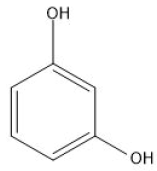
(B). Catechol
(II).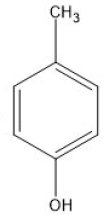
(C). Hydroquinone
(III).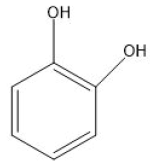
(D). p-Cresol
(IV).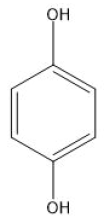 CUET 2023 Easy
 - Answer the question on the basis of passage given below :
Aldehydes and ketones represent two essential classes of organic compounds
which are extensively used in the synthesis of a wide variety of other organic molecules.
Due to the inherent polarity of the central carbonyl group, these substances readily undergo nucleophilic addition reactions.
Broadly speaking, these addition reactions can be categorized into two types:
one in which simple addition of the nucleophilic reagent occurs across the \(> C = O\) bond, and the second type where the initial addition is subsequently followed by the elimination of a water molecule.
A variety of ammonia derivatives, including hydroxylamine, hydrazine, phenylhydrazine,
2, 4-dinitroplhenylhdrasine, and semicarbaside, all belong to this second category of reactions.
These specific derivatives are fundamentally used for the identification and definitive characterization of aldehydes and ketones. Significantly, both types of nucleophilic addition reactions are strongly influenced by both steric and electronic factors.
As a general rule, aliphatic aldehydes exhibit higher reactivity compared to aromatic aldehydes.
The aliphatic aldehydes demonstrate the ability to reduce both Fehling's solution and Tollen's reagent, whereas aromatic aldehydes are limited to reducing only Tollen's reagent.
In a similar manner to aldehydes, aromatic ketones are observed to be less reactive than aliphatic ketones towards all nucleophilic addition reactions.
In a separate context, phenols and carborylic acids both exhibit acidic properties in nature.
Both classes of compounds readily dissolve in NaOH solution and cause blue litmus to turn red.
However, carboxylic acids stand out as much stronger acids than phenols and thus can decompose sodium bicarbonate \(\left( NaHCO _3\right)\) with the distinct evolution of \(CO _2\) gas, a reaction which phenols do not undergo.
It is important to note that both electron- donating and electron- withdrawing substituents significantly influence the acid strength of both aliphatic as well as aromatic carborylic acids.
Furthermore, unlike all other common aliphatic acids, formic acid uniquely possesses reducing properties and simultaneously does not display the typical reactions characteristic of the alkyl group.
Which of the following compound most readily undergoes nucleophilic addition reaction?CUET 2023 Easy - Answer the question on the basis of passage given below :
Aldehydes and ketones represent two essential classes of organic compounds which are extensively used in the synthesis of a wide variety of other organic molecules.
Due to the inherent polarity of the central carbonyl group, these substances readily undergo nucleophilic addition reactions.Broadly speaking, these addition reactions can be categorized into two types:
one in which simple addition of the nucleophilic reagent occurs across the \(> C = O\) bond, and the second type where the initial addition is subsequently followed by the elimination of a water molecule.
A variety of ammonia derivatives, including hydroxylamine, hydrazine, phenylhydraaine, 2, 4-dinitroplhenylhdrazine, and semicarbazide, all belong to this second category of reactions.
These specific derivatives are fundamentally used for the identification and definitive characterization of aldehydes and ketones. Significantly, both types of nucleophilic addition reactions are strongly influenced by both steric and electronic factors.
As a general rule, aliphatic aldehydes exhibit higher reactivity compared to aromatic aldehydes.
The aliphatic aldehydes demonstrate the ability to reduce both Fehling's solution and Tollen's reagent, whereas aromatic aldehydes are limited to reducing only Tollen's reagent.
In a similar manner to aldehydes, aromatic ketones are observed to be less reactive than aliphatic ketones towards all nucleophilic addition reactions.
In a separate context, phenols and carboxylic acids both exhibit acidic properties in nature.
Both classes of compounds readily dissolve in NaOH solution and cause blue litmus to turn red.
However, carboxylic acids stand out as much stronger acids than phenols and thus can decompose sodium bicarbonate \(\left( NaHCO _3\right)\) with the distinct evolution of \(CO _2\) gas, a reaction which phenols do not undergo.
It is important to note that both electron- donating and electron- withdrawing substituents significantly influence the acid strength of both aliphatic as well as aromatic carboxylic acids.
Furthermore, unlike all other common aliphatic acids, formic acid uniquely possesses reducing properties and simultaneously does not display the typical reactions characteristic of the alkyl group.
Carboxylic acid do not give the characteristic reaction of carbonyl group because:CUET 2023 Medium
More PYQs from CUET
- Which of the following are correct with reference to rDNA technology?
(A) Exo-nuclease removes nucleotides from the ends of DNA
(B) Replication starts at ori
(C) High velocity microparticle of gold, coated with DNA, are used to transfer DNA in a method known as gene gun
(D) Endo-nuclease makes cut at specific positions within DNA
Choose the correct answer from the options given below:CUET 2025 Medium - \(y=e^{x+e^{\infty+e^{x+\cdots \infty}}}\) then \(\frac{d y}{d x}=\) ______________CUET 2023 Easy
- If \(A\) is a square matrix of order 3 such that \(|A|=2\), then the value of \(|\operatorname{adj}(\operatorname{adj} A)|\) is :CUET 2023 Easy
- For the objective function \(Z = 3x + 5y\) subject to constraints \(x + 3y ≥ 3, x + y ≥ 2, x ≥ 0, y ≥ 0\):CUET 2025 Medium
- Match List-I with List-II
Choose the correct answer from the options given below :List-I ( Matrix A ) List-II ( Determinant of adj A ) (A) \(\left[\begin{array}{cc}2 & 1 \\0 & -1\end{array}\right]\) (I) 6 (B) \(\left[\begin{array}{cc}0 & 1 \\4 & -1\end{array}\right]\) (II) 5 (C) \(\left[\begin{array}{cc}1 & 2 \\-3 & -1\end{array}\right]\) (III) \(-4\) (D) \(\left[\begin{array}{cc}4 & -2 \\3 & 0\end{array}\right]\) (IV) \(-2\) CUET 2025 Easy - Which of the following is used as a biological control agent for insects and other arthropods ?CUET 2023 Easy