


CUET · CHEMISTRY · PYQ PAPER 2025
Read the passage carefully and answer the questions
The speed at which a chemical reaction takes place is called the rate of reaction. The rate of reaction depends on various factors like concentration of the reactants, temperature, etc. The relation between the rate of reaction and the concentration of reacting species is represented by the equation r = k[A]x[B]y, where x and y are the order of the reaction with respect to the reactants A and B, respectively. The overall order of the reaction is x + y. The rate of reaction can also be increased by the use of a catalyst which provides an alternate pathway of lower activation energy. It increases the rate of forward and backward reaction to an equal extent. It does not alter the Gibbs energy of the reaction.
If the rate of reaction becomes twenty-seven times upon increasing the concentration of reactant by three times, the order of this reaction is
- A \(0\)
- B 1
- C 3
- D 2
Answer & Solution
Correct Answer
(C) 3
Step-by-step Solution
Detailed explanation
\( \text{rate} \propto [\text{reactant}]^n \) \( 27 \propto 3^n \) \( 3^n = 27 \) \( n = 3 \)
See the Complete Solution
Get step-by-step explanations for this and 2.5 Lakh+ more JEE, NEET & CET questions.
- Unlock all solutions
- Practice the full chapter
- Track accuracy across PYQs
4.8 rated on Google Play · 14,000+ reviews
More questions from CHEMISTRY
- The chemical composition of Tollens' reagent isCUET 2025 Medium
- Which of the following classes of compounds on hydrolysis yields carboxylic acids?
(A) RCN
(B) \(RCONH_{2}\)
(C) RCOCl
(D) RCOOR'
Choose the \textbf\{correct answer\} from the options given below:CUET 2025 Medium - Minimum boiling azeotropes show __________ deviation from Raoult's Law at a specific composition.CUET 2025 Easy
- Match List I with List II
List-I List-II A. Benzophenone \(\rightarrow\) Diphenylmethane I. \(\text{LiAlH}_4\) B. Benzaldehyde \(\rightarrow\) 1-phenylethanol II. DIBAL-H C. Cyclohexanone \(\rightarrow\) Cyclohexanol III. \(\text{NH}_2\text{NH}_2\text{, KOH}\) D. Methylbenzoate \(\rightarrow\) Benzaldehyde IV. \(\text{CH}_3\text{MgBr, H}_2\text{O}\)
" Choose the correct answer from the options given below:CUET 2023 Medium - Match List-I with List-II
List - I (Name of compound) List - II (Structure) (A). Resorcinol (I) 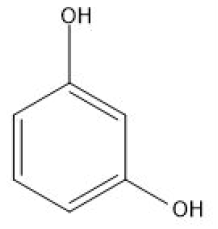
(B). Catechol (II) 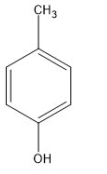
(C). Hydroquinone (III) 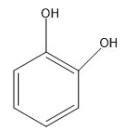
(D). p-Cresol (IV) 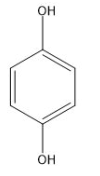
Choose the correct answer from the options given below:CUET 2025 Medium - Formaldehyde undergoes the Cannizzaro reaction because:
(A) It has alpha-hydrogen atom.
(B) It does not have alpha-hydrogen atom.
(C) It does not undergo self-oxidation and reduction on heating with concentrated alkali.
(D) It undergoes self-oxidation and reduction on heating with concentrated alkali.
Choose the correct answer from the options given below :CUET 2024 Medium
More PYQs from CUET
- Match List-l with List-II
Choose the correct answer from the options given below :List-l List-II (A) Ambident nucleophiles (I) Symmetrical object (B) Plane polarized light (II) Saytzeff rule (C) Superimposable mirror image (III) Cyanides and nitrites (D) β-elimination reaction (IV) Nicol Prism CUET 2025 Easy - What is the ratio of amplitude of magnetic field to the amplitude of electric field for an electromagnetic wave propagating in vacuum?CUET 2023 Medium
- A medicinal plant growing in different Himalayan ranges shows different potency and concentration of the active chemical (reserpine) that the plant produces. Identify the plant:CUET 2025 Medium
- A vertical electric field of magnitude \( 4.9 \times 10^5 \text{ NC}^{-1} \) just prevents a water droplet of mass \( 0.1 \text{ g} \) from falling. What is the charge on the droplet? Take acceleration due to gravity \( 9.8 \text{ ms}^{-2} \).CUET 2023 Medium
- Let the determinant be \(\Delta=\left|\begin{array}{ccc}x & \sin \theta & \cos \theta \\ -\sin \theta & -x & 1 \\ \cos \theta & 1 & x\end{array}\right|\)
Which of the following statements are correct ?
(A) \(\Delta\) is independent of \(\theta\)
(B) \(\Delta\) is independent of \(x\)
(C) \(\Delta\) is independent of \(\theta\) and \(x\) both and is equal to 1
(D) \(\Delta\) depends upon both of \(x\) and \(\theta\)
(E) \(\Delta\) is independent of \(\theta\) and is equal to \(x^3\)
Choose the correct answer from the options given below :CUET 2023 Medium - Which of the following compounds can be used as antifreeze in automobile radiators?CUET 2023 Medium