


CUET · CHEMISTRY · PYQ PAPER 2025
Read the passage carefully and answer the questions:
The degeneracy of the \(d\) orbitals has been removed due to ligand electron-metal electron repulsions in the octahedral complex to yield three orbitals of lower energy, \(t_{2 g}\) set and two orbitals of higher energy, \(e_g\) set. This splitting of the degenerate levels due to the presence of ligands in a definite geometry is termed as crystal field splitting and the energy separation is denoted by \(\Delta_0\). Thus energy of the two \(e_g\) orbitals will increase by \((3 / 5) \Delta_0\) and that of three \(t_{2 g}\) will decrease by \((2 / 5) \Delta_0\). The crystal field splitting \(\Delta_{\circ}\) depends upon the field produced by the ligand and charge on the metal ion. Some ligands are able to produce strong fields, in which case the splitting will be large, whereas others produce weak fields and consequently result in small splitting of \(d\) orbitals. Relative magnitude of crystal field splitting energy \(\Delta_{\circ}\) and pairing energy, \(P\) (energy required for electron pairing in a single orbital) determine the formation of low spin ( \(\Delta_{\circ}>P\) ) or high spin ( \(\Delta_{\circ}<P\) ) complex. In tetrahedral coordination entity formation, the \(d\)-orbital splitting is inverted and is smaller as compared to the octahedral field splitting. The crystal field theory attributes the colour of the complex to \(d-d\) transition of the electron. The colour of the coordination compounds depends on the crystal field splitting. In the absence of ligand, crystal field splitting does not occur and hence the substance is colourless.
Which of the following complex is not expected to be coloured?
- A \([Ti(H_{2}O)_{6}]^{3+}\)
- B \(CuSO_{4}.5H_{2}O\)
- C \([Zn(H_{2}O)_{6}]^{2+}\)
- D \([Ni(H_{2}O)_{6}]^{2+}\)
Answer & Solution
Correct Answer
(C) \([Zn(H_{2}O)_{6}]^{2+}\)
Step-by-step Solution
Detailed explanation
For \([Zn(H_{2}O)_{6}]^{2+}\): Metal ion: \(Zn^{2+}\) Electron configuration of \(Zn\): \([Ar] 3d^{10} 4s^2\) Electron configuration of \(Zn^{2+}\): \([Ar] 3d^{10}\) Since \(d\)-orbitals are completely filled, no \(d-d\) transitions are possible. Therefore, it is not expected to…
See the Complete Solution
Get step-by-step explanations for this and 2.5 Lakh+ more JEE, NEET & CET questions.
- Unlock all solutions
- Practice the full chapter
- Track accuracy across PYQs
4.8 rated on Google Play · 14,000+ reviews
More questions from CHEMISTRY
- Allyl phenyl ether can be obtained by heating.CUET 2025 Medium
- Read the passage carefully and answer the Questions
In the formation of coordination complexes, if the inner \(d\) orbital \((n - 1)d\) is used in hybridisation, the complex, is called an inner orbital or low spin or spin paired complex. And if it uses outer \(d\) orbital \((nd)\) in hybridisation (like \(sp^3d^2\)), it is called outer orbital or high spin or spin free complex. The degeneracy of the \(d\) orbitals has been removed due to ligand electron-metal electron repulsions in the complex. This splitting of the degenerate levels due to the presence of ligands in a definite geometry is termed as crystal field splitting. For coordination complexes, the magnetic moment is determined by the number of unpaired electrons and is calculated by using the 'spin-only' formula, \(\mu = \sqrt{n(n+2)}\) where \(n\) is the number of unpaired electrons and \(\mu\) is the magnetic moment in units of Bohr magneton \((BM)\). The coordination compounds are of great importance. These compounds are widely present in the mineral, plant and animal worlds and are known to play many important functions in the area of analytical chemistry, metallurgy, biological systems, industry and medicine.
Fe(II) octahedral complexes can show different 'spin only' magnetic moments for arrangements in the presence of weak and strong ligands. The 'spin only' magnetic moments of these complexes with weak and strong ligands, respectively, areCUET 2023 Medium - Arrange the following compounds in increasing order of their \(\text{pKa}\) values.
(A) o-nitrophenol
(B) m-nitrophenol
(C) Phenol
(D) Ethanol
Choose the correct answer from the options given below:CUET 2023 Medium - The total EMF of a voltaic cell is greater than zero. Which of the following statements is true?CUET 2023 Medium
- Answer the question on the basis of passage given below :
Nitrogen differs from rest of the members of group 15 due to its small size, high electronegativity, high ionization enthalpy and non-availability of d orbitals. Nitrogen has unique ability to form pa - pa multiple bonds with itself and with other elements having small size and high electronegativity. Heavier elements of this group do not form pa - pr bonds as their atomic orbitals are so large and diffuse that they cannot have effective overlapping.
Linear structure is exhibited by:CUET 2023 Medium - Read the passage carefully and answer the questions
Alcohols and phenols are formed when a hydrogen atom in a hydrocarbon, aliphatic and aromatic respectively is replaced by - OH group. These are further classified on the basis of number of hydroxy groups and according to the hybridization of the carbon atom \(sp ^2\) or \(sp ^3\) to which the -OH group is attached. They find applications in industry as well as in day-to-day life. One of the most commercially obtained alcohol also known as wood spirit is obtained by destructive distillation of wood. Both alcohols and phenols are acidic in nature. The acidity of alcohols and phenols vary according to the nature of substituent(s) attached to them. Alcohols and phenols react with carboxylic acids, acid chlorides and acid anhydrides to form esters. Introduction of acetyl group in alcohols and phenols is called acetylation. Phenol undergo electrophilic aromatic substitution reaction because the -OH activates the benzene ring. It undergoes nitration, halogenation and sulphonation reactions.
The final product of the following reaction is: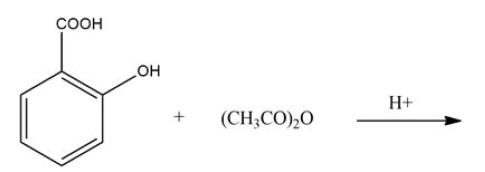 CUET 2025 Hard
More PYQs from CUET
- If matrix\(A_p=\left[\begin{array}{ll}p & (p+1) \\ p & (p-1)\end{array}\right], p \in \mathbb{N}\) (where \(\mathbb{N}\) is the set of natural numbers), then the value of \(\left|A_1\right|+\left|A_2\right|+\left|A_3\right|+\cdots+\left|A_{2025}\right|\) is:CUET 2025 Easy
- Read the passage carefully. Attempt the questions.
In our body, cell growth and differentiation is highly controlled and regulated. In cancer cells, there is breakdown of these regulatory mechanisms. Cancerous cells just continue to divide giving rise to masses of cells called tumors. Benign tumors normally remain confined to their original location. The malignant tumors, on the other hand are a mass of proliferating cells. These cells actively divide and starve the normal cells by competing for vital nutrients. Cells sloughed from such tumors reach distant sites through blood, and wherever they get lodged in the body, they start a new tumor there. This property is called metastasis. Transformation of normal cells into cancerous cells may be induced by physical, chemical or biological agents called carcinogens.
The statement which is correct for cancer cells:CUET 2023 Easy - The solution of the differential equation \(\frac{d y}{d x}=\sqrt{\frac{y}{x}}\) isCUET 2025 Easy
- Benzene and naphthalene form an ideal solution at room temperature.
The true statements for this solution are :
A. \(\Delta\text{G}\) is positive.
B. \(\Delta\text{S}_{\text{system}}\) is positive.
C. \(\Delta\text{S}_{\text{surroundings}} = 0\).
D. \(\Delta\text{H}_{\text{mix}} = 0\).
E. \(\Delta\text{V}_{\text{mix}} = 0\).
Choose the correct answer from the options given below :CUET 2023 Hard - The sides of an equilateral triangle are increasing at the rate of 2 cm/s. The rate at which the area increases, when side is 10 cm is:CUET 2023 Medium
- Let \(A=\left[\begin{array}{cc}\frac{1}{3} & 2 \\ 0 & 2 x-3\end{array}\right]\) and \(B=\left[\begin{array}{cc}3 & 6 \\ 0 & -1\end{array}\right]\).
If AB = I (where I is an identity matrix of order 2), then the value of x is:CUET 2025 Medium