


CUET · CHEMISTRY · PYQ PAPER 2025
Read the passage carefully and answer
Carbohydrates are essential for both plants and animals. Some common examples of carbohydrates are glucose, fructose, sucrose, glycogen, cellulose and starch. They form a major portion of our food. Honey has been used for a long time as an instant source of energy in Ayurvedic medicine. Carbohydrates are used as storage molecules in both plants and animals. The cell wall of bacteria and plants is made of cellulose. We use cellulose in the form of wood for making furniture and as cotton fiber for clothing. They also provide raw material for textiles, paper, lacquers, and breweries. Carbohydrates are classified as Monosaccharides, Oligosaccharides and Polysaccharides on the basis of their behavior towards hydrolysis.
Monosaccharides cannot be hydrolyzed further to simpler units whereas oligosaccharides can yield 2-10 units of monosaccharides on hydrolysis. Polysaccharides, which are non-sugars yield a large number of monosaccharide units on hydrolysis.
Answer the following questions about carbohydrates:
Identify a component of starch from among the following.
- A Amylase
- B Amylose
- C Galactose
- D Fructose
Answer & Solution
Correct Answer
(B) Amylose
Step-by-step Solution
Detailed explanation
Amylose
See the Complete Solution
Get step-by-step explanations for this and 2.5 Lakh+ more JEE, NEET & CET questions.
- Unlock all solutions
- Practice the full chapter
- Track accuracy across PYQs
4.8 rated on Google Play · 14,000+ reviews
More questions from CHEMISTRY
- Choose the correct combination(s) :
(A) Nylon 6: Addition Copolymer
(B) Buna-S: Addition homopolymer
(C) Melamine: Condensation Copolymer
(D) Teflon : Addition homopolymer
Choose the correct answer from the options given below :CUET 2023 Hard - Match List-I (type of linkages) with List-II (Biomolecules)
List-I (Type of linkage) List-II (Biomolecule) (A) Glycosidic linkage (I) Tertiary structure of proteins (B) Peptide Linkage (II) Disaccharide (C) Phosphodiester linkage (III) Primary structure of proteins (D) Disulfide linkage (IV) Nucleotide
Choose the correct answer from the options given below:CUET 2025 Easy - The half life of decaying \({ }^{14} C\) is 6000 years approximately. How much time is needed to decaying \(80 \%\) of \({ }^{14} C ?[\log 5=0.6990]\)CUET 2023 Medium
- Match the items given in List-I with items given in List-II
Choose the correct answer from the options given below:List-I List-II (A) Interstitial Compounds (I) Large number of complex (B) Alloy formation (II) Chemically inert (C) Transition metals (III) Ni (D) Catalytic hydrogenation (IV) Blend of different metals CUET 2025 Medium - Read the passage carefully and answer the Questions:
According to Valence Bond theory, the metal atom or ion under the influence of ligands can use its ( \(n-1\) )d, \(n s, n p\) or \(n s, n p, n d\) orbitals for hybridisation to yield a set of equivalent orbitals of definite geometry such as octahedral, tetrahedral, square planar and so on. These hybridised orbitals are allowed to overlap with ligand orbitals that can donate electron pairs for bonding. While the VB theory, to a larger extent, explains the formation, structures and magnetic behaviour of coordination compounds, it suffers from the many shortcomings. The Crystal field theory (CFT) is an electrostatic model which considers the metal-ligand bond to be ionic arising purely from electrostatic interactions between the metal ion and the ligand. The five \(d\) orbitals in an isolated gaseous metal atom/ion have same energy, i.e., they are degenerate. This degeneracy is maintained if a spherically symmetrical field of negative charges surrounds the metal atom/lon. However, when this negative field is due to ligands in a complex, it becomes asymmetrical and the degeneracy of the \(d\) orbitals is lifted. It results in splitting of the \(d\) orbitals. The pattern of splitting depends upon the nature of the crystal field.
Which of the following is not true about the limitations of VBT:CUET 2023 Medium - Identify the name of the amino acid representing the following structure
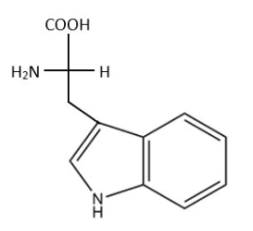 CUET 2025 Easy
More PYQs from CUET
- If the function defined by \(f(x)=\left\{\begin{array}{ll}k x^2+1, & \text { if } x \leq 1 \\ 2, & \text { if } x>1\end{array}\right.\) is continuous at \(x=1\), then \(k\) is equal toCUET 2025 Medium
- If \(\vec{a}+\vec{b}+\vec{c}=0,|\vec{a}|=3,|\vec{b}|=25,|\vec{c}|=7\), then the angle between \(\vec{a}\) and \(\vec{b}\) is:CUET 2023 Easy
- Select the wrong statement(s) with respect to HIV
A. HIV belongs to retrovirus group.
B. HIV infection can occur by transfusion of contaminated blood and blood products.
C. In macrophages, viral DNA is produced by reverse transcription.
D. HIV enter into B-lymphocytes, replicate and produce progeny.
Choose the correct answer from the options given below:CUET 2023 Hard - The function \(f(x)=x e^x\) increases only for:CUET 2023 Hard
- Two slits are made 0.8 mm apart and the screen is placed 1.5 m away. What should be the width of each slit to obtain 8 maxima of the double slit pattern within the central maximum of the single slit pattern?CUET 2025 Medium
- Which of the following statements are correct?
(A) If \(E\) and \(F\) are independent events then \(P(E \cap F)=P(E) P(F)\)
(B) If \(E\) and \(F\) are mutually exclusive events, then \(P(E \cup F)=P(E)+P(F)-P(E) P(F)\)
(C) The conditional probability of an event \(E\), given the occurrence of the event \(F\) is given by \(\frac{P(E \cap F)}{P\left(F^{\prime}\right)}, P(F) \neq 0\)
(D) If \(E\) and \(F\) be the events associated with the sample space \(S\) of an experiment, then \(P(\bar{E} \mid F)=2-P(E \mid F)\)
Choose the correct answer from the options given below:CUET 2025 Easy