


CUET · CHEMISTRY · PYQ PAPER 2024
Although chlorine is an electron-withdrawing group, it is ortho- and para-directing in electrophilic aromatic substitution because:
(A) Chlorine withdraws electrons through inductive effect.
(B) Chlorine stabilizes the intermediate carbocation formed during electrophilic substitution via resonance.
(C) Chlorine donates electrons through resonance.
(D) Chlorine is a deactivating group due to its -1 effect.
Choose the correct answer from the options below:
- A (A), (B), and (C) only
- B (A), (C), and (D) only
- C (B), (C), and (D) only
- D (A), (B), (C), and (D)
Answer & Solution
Correct Answer
(D) (A), (B), (C), and (D)
Step-by-step Solution
Detailed explanation
The overall behavior of chlorine in electrophilic aromatic substitution is characterized by two opposing effects: 1. Inductive Effect (-I): Chlorine is highly electronegative and withdraws electron density from the benzene ring through the sigma bond, making the ring less…
See the Complete Solution
Get step-by-step explanations for this and 2.5 Lakh+ more JEE, NEET & CET questions.
- Unlock all solutions
- Practice the full chapter
- Track accuracy across PYQs
4.8 rated on Google Play · 14,000+ reviews
More questions from CHEMISTRY
- Match List-I (Name of the Base) with List-II (Structure)
Choose the correct answer from the options given below :List-I (Name of the Base) List-II (Structure) (A). Adenine (A) (I). 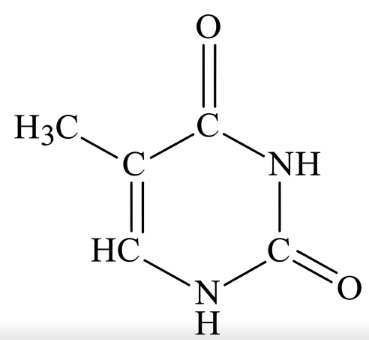
(B). Cytosine (C) (II). 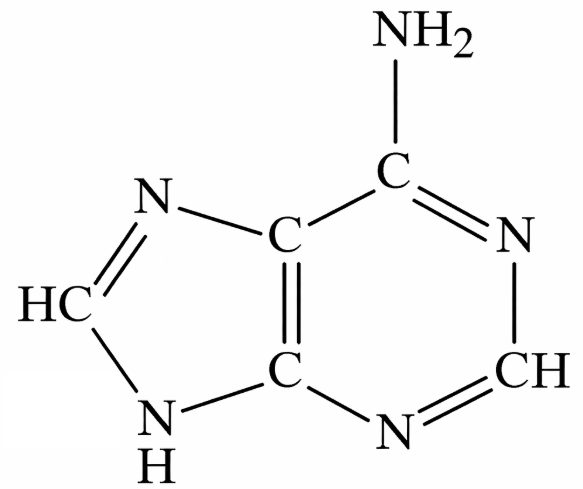
(C). Thymine (T) (III). 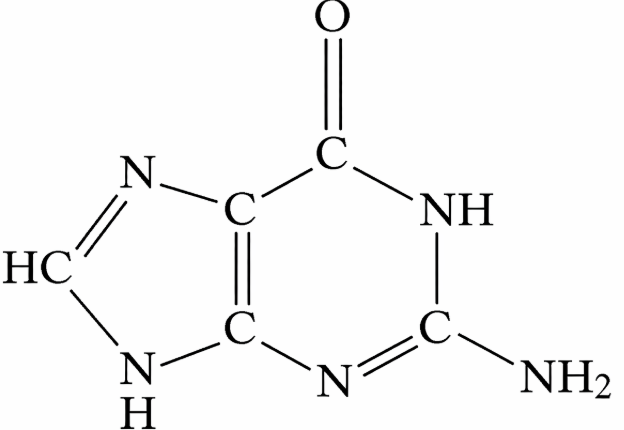
(D). Guanine (G) (IV). 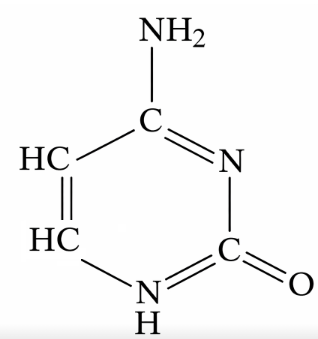 CUET 2023 Easy
 - Select the correct statements from the following:
(A) Mn show the highest oxidation state in first transition series elements
(B) Titanium (II) is more stable than titanium (III) and titanium (IV).
(C) Scandium does not exhibit variable oxidation states.
(D) Zn form complexes with only (II) oxidation state.
Choose the correct answer from the options given below:CUET 2025 Easy - Answer the question on the basis of passage given below :
Aldehydes and ketones represent two essential classes of organic compounds which are extensively used in the synthesis of a wide variety of other organic molecules.
Due to the inherent polarity of the central carbonyl group, these substances readily undergo nucleophilic addition reactions.Broadly speaking, these addition reactions can be categorized into two types:
one in which simple addition of the nucleophilic reagent occurs across the \(> C = O\) bond, and the second type where the initial addition is subsequently followed by the elimination of a water molecule.
A variety of ammonia derivatives, including hydroxylamine, hydrazine, phenylhydraaine, 2, 4-dinitroplhenylhdrazine, and semicarbazide, all belong to this second category of reactions.
These specific derivatives are fundamentally used for the identification and definitive characterization of aldehydes and ketones. Significantly, both types of nucleophilic addition reactions are strongly influenced by both steric and electronic factors.
As a general rule, aliphatic aldehydes exhibit higher reactivity compared to aromatic aldehydes.
The aliphatic aldehydes demonstrate the ability to reduce both Fehling's solution and Tollen's reagent, whereas aromatic aldehydes are limited to reducing only Tollen's reagent.
In a similar manner to aldehydes, aromatic ketones are observed to be less reactive than aliphatic ketones towards all nucleophilic addition reactions.
In a separate context, phenols and carboxylic acids both exhibit acidic properties in nature.
Both classes of compounds readily dissolve in NaOH solution and cause blue litmus to turn red.
However, carboxylic acids stand out as much stronger acids than phenols and thus can decompose sodium bicarbonate \(\left( NaHCO _3\right)\) with the distinct evolution of \(CO _2\) gas, a reaction which phenols do not undergo.
It is important to note that both electron- donating and electron- withdrawing substituents significantly influence the acid strength of both aliphatic as well as aromatic carboxylic acids.
Furthermore, unlike all other common aliphatic acids, formic acid uniquely possesses reducing properties and simultaneously does not display the typical reactions characteristic of the alkyl group.
Carboxylic acid do not give the characteristic reaction of carbonyl group because:CUET 2023 Medium - What will be the product of the following reaction :
\(C_6H_5ONa + C_2H_5Cl \rightarrow ?\)CUET 2023 Easy - Answer the question on the basis of passage given below :
For the transition elements
Sc \(\quad\) Ti \(\quad\) V \(\quad\) Cr \(\quad\) Mn\(\quad\) Fe \(\quad\) Co \(\quad\) Ni \(\quad\) Cu \(\quad\) Zn
Atomic numbers :
21 \(\quad\) 22 \(\quad\) 23 \(\quad\) 24 \(\quad\) 25 \(\quad\) 26 \(\quad\) 27 \(\quad\) 28 \(\quad\) 29 \(\quad\) 30 \(\quad\)
Which transition element has large enthalpy of atomization \(\Delta H_a^{\circ} \text{ (kJ mol}^{-1}\))?CUET 2023 Medium - A cell is prepared by dipping a Cu rod in \(1\ M\ CuSO_4\) solution and Sn rod in \(1\ M\ SnCl_2\) solution.
The standard electrode potential of Cu is \(+0.34\ V\) and Sn is \(-0.14\ V\). Emf of cell will be :CUET 2023 Medium
More PYQs from CUET
- Arrange the given stages of spermatogenesis in the correct sequence.
(A). Spermatozoa
(B). Spermatocytes
(C). Spermatogonia
(D). Spermatids
Choose the correct answer from the options given below:CUET 2025 Medium - Answer the question on the basis of passage given below :
There are some deposits of nitrates and phosphates in the earth’s crust. Nitrates are more soluble in water. Nitrates are difficult to reduce under laboratory conditions, but microbes do it easily. Ammonia forms a large number of complexes with transition metals. Hybridisation easily explains the ease of sigma donation capability of NH₃ and PH₃. Phosphine is an inflammable gas, prepared from white phosphorus.
Which of the following is the correct statement?
A. Between NH₃ and PH₃, NH₃ is a better electron donor because the lone pair of electrons occupy spherical 's' orbital and is less directional.
B. Between NH₃ and PH₃, NH₃ is a better electron donor because the lone pair of electrons occupies sp³ orbital and is more directional.
C. Between NH₃ & PH₃, PH₃ is a better electron donor because the lone pair of electrons occupies sp² orbital and is more directional.
D. Between NH₃ & PH₃, PH₃ is a better electron donor because the lone pair of electrons occupies 's' orbital and is less directional.
Choose the most appropriate answer from the options given below:CUET 2023 Easy - A circular loop of area \(0.02 m^2\) carrying a current of 5 A is held with its plane normal to a magnetic field of 0.2 T. The torque acting on the loop isCUET 2025 Easy
- A wire of length 4 m carrying current I A is bent in the form of a circle. Its magnetic moment will be :CUET 2023 Hard
- A beam of light of wavelength 500 nm from a distant source falls on a single slit of width \( 10^{-4} \, \text{m} \), and the resulting diffraction pattern is observed on a screen 2 m away. The width of the central bright fringe is:CUET 2025 Medium
- In the given equations (Note: equations are not balanced):
\(Zn + Conc. HNO_3 \rightarrow Zn(NO_3)_2 + x + H_2O\)
\(Zn + Dil. HNO_3 \rightarrow Zn(NO_3)_2 + y + H_2O\)
The compounds \(x\) and \(y\) respectively are:CUET 2023 Medium