


CUET · BIOLOGY · PYQ PAPER 2025
There are two kinds of nucleases - exonucleases and endonucleases. Exonucleases remove nucleotides from the ends of the DNA whereas, endonucleases make cuts at specific positions within the DNA. The cutting of DNA by restriction endonucleases results in the fragments of DNA. These fragments can be separated by a technique known as gel electrophoresis. Since DNA fragments are negatively charged molecules they can be separated by forcing them to move towards the anode under an electric field through a medium/matrix. Small volume cultures cannot yield appreciable quantities of products. To produce in large quantities, the development of bioreactors, where large volumes (100 - 1000 litres) of culture can be processed, was required. Thus, bioreactors can be thought of as vessels in which raw materials are biologically converted into specific products, individual enzymes, etc., using microbial plant, animal or human cells. PCR stands for Polymerase Chain Reaction. In this reaction, multiple copies of the gene (or DNA) of interest are synthesised in vitro using two sets of primers (small chemically synthesised oligonucleotides that are complementary to the regions of DNA) and the enzyme DNA polymerase.
Identify the incorrect fact about the PCR?
- A Primers are small chemically synthesised oligonucleotides that are complementary to the regions of DNA.
- B In PCR, multiple copies of the gene (or DNA) of interest is synthesised in vitro using two sets of primers.
- C If the process of replication of DNA is repeated many times, the segment of DNA can be amplified to approximately billion times, i.e., 1 billion copies are made.
- D The repeated amplification in PCR is achieved by the use of a thermostable DNA polymerase, isolated from a bacterium, Thermus quatica.
Answer & Solution
Correct Answer
(C) If the process of replication of DNA is repeated many times, the segment of DNA can be amplified to approximately billion times, i.e., 1 billion copies are made.
Step-by-step Solution
Detailed explanation
If the process of replication of DNA is repeated many times, the segment of DNA can be amplified to approximately billion times, i.e., 1 billion copies are made.
See the Complete Solution
Get step-by-step explanations for this and 2.5 Lakh+ more JEE, NEET & CET questions.
- Unlock all solutions
- Practice the full chapter
- Track accuracy across PYQs
4.8 rated on Google Play · 14,000+ reviews
More questions from BIOLOGY
- Identify the autosome-linked recessive disorder.CUET 2023 Easy
- Under Ganga Action and Yamuna Action plans, it is proposed toCUET 2025 Medium
- Match List-I with List-II
Choose the correct answer from the options given below:List-I (Extinct species) List-II (Countries) (A) Dodo (I) Africa (B) Quagga (II) Russia (C) Thylacine (III) Mauritius (D) Steller's sea cow (IV) Australia CUET 2025 Easy - When Tt x Tt are crossed, how many percent of the offsprings show a recessive phenotype?CUET 2023 Medium
- Observe the diagram and answer the following questions:
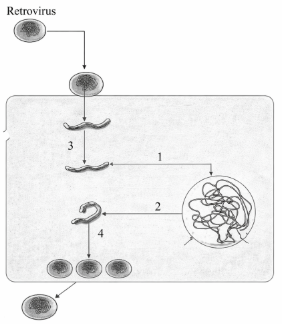
Match List I with List II.
Choose the correct answer from the options given below:LIST I LIST II A. 1 I. Viral DNA is produced by reverse transcriptase B. 2 II. Production of new viruses C. 3 III. Viral DNA incorporates in host genome D. 4 IV. Production of new viral RNA by infected cell CUET 2023 Hard - Choose the correct match. '+' for beneficial interaction '-' for detrimental and 'O' for neutral effect.
Choose the correct answer from the options given below:LIst - I LIst - II Species A Species B Name of Interaction (A) + + (I) Competition (B) + - (II) Mutualism (C) - - (III) Amensalism (D) - 0 (IV) Predation CUET 2023 Easy
More PYQs from CUET
- The process used for the conversion of sugar into Ethanol is :CUET 2023 Easy
- Phytophagous insects feed on :CUET 2023 Medium
- "Answer the question on basis of passage given below :
Carboxylic acids are weaker than mineral acids, but they are stronger acids than alcohols and many simple phenols (\(\text{pKa}\) is ~ 16 for ethanol and 10 for phenol). The higher acidity of carboxylic acids as compared to phenols can be understood similarly. The conjugate base of carboxylic acid, a carboxylate ion, is stabilised by two equivalent resonance structures in which the negative charge is at the more electronegative oxygen atom. The conjugate base of phenol, a phenoxide ion, has non-equivalent resonance structures in which the negative charge is at the less electronegative carbon atom. Further, the negative charge is delocalised over two electronegative oxygen atoms in carboxylate ion whereas it is less effectively delocalised over one oxygen atom and less electronegative carbon atoms in phenoxide ion. Thus, the carboxylate ion is more estabilised than phenoxide ion, so carboxylic acids are more acidic than phenols.
Effect of substituents on the acidity of carboxylic acids: substituents may affect the stabliity of the conjugate base and thus, also affect the acidity of the carboxylic acids. Electron withdrawing group increase the acidity of carboxylic acids by stabilising the conjugate base through delocalisation of the negative charge by inductive and/or resonance effects. Conversely, electron donating groups decrease the acidity by destabilising the conjugate base.
The correct order of decreasing acid strength of:
Acetic acid (A), Formic acid (B), Benzoic acid (C) is:"CUET 2023 Hard - What is an example of globular protein?
(A) Insulin
(B) Keratin
(C) Albumin
(D) Myosin
Choose the correct answer from the options given below :CUET 2025 Easy - The parameter to be increased in order to increase the angular magnification of a simple microscope isCUET 2025 Medium
- Heavy water and __________ is one of the substance used as moderator in reactors.CUET 2023 Medium