


CUET · BIOLOGY · PYQ PAPER 2025
There are two kinds of nucleases - exonucleases and endonucleases. Exonucleases remove nucleotides from the ends of the DNA whereas, endonucleases make cuts at specific positions within the DNA. The cutting of DNA by restriction endonucleases results in the fragments of DNA. These fragments can be separated by a technique known as gel electrophoresis. Since DNA fragments are negatively charged molecules they can be separated by forcing them to move towards the anode under an electric field through a medium/matrix. Small volume cultures cannot yield appreciable quantities of products. To produce in large quantities, the development of bioreactors, where large volumes (100 - 1000 litres) of culture can be processed, was required. Thus, bioreactors can be thought of as vessels in which raw materials are biologically converted into specific products, individual enzymes, etc., using microbial plant, animal or human cells. PCR stands for Polymerase Chain Reaction. In this reaction, multiple copies of the gene (or DNA) of interest are synthesised in vitro using two sets of primers (small chemically synthesised oligonucleotides that are complementary to the regions of DNA) and the enzyme DNA polymerase.
Identify the correct enzyme to release the DNA from the fungal cells.?
- A Cellulase
- B Lysozyme
- C Chitinase
- D Lipase
Answer & Solution
Correct Answer
(C) Chitinase
Step-by-step Solution
Detailed explanation
Chitinase
See the Complete Solution
Get step-by-step explanations for this and 2.5 Lakh+ more JEE, NEET & CET questions.
- Unlock all solutions
- Practice the full chapter
- Track accuracy across PYQs
4.8 rated on Google Play · 14,000+ reviews
More questions from BIOLOGY
- The phenomenon where a single gene can have multiple phenotypic effects is known as:CUET 2023 Hard
- Baculoviruses are pathogen that attack :CUET 2025 Easy
- Which of the following is NOT a characteristic of Down's Syndrome?CUET 2023 Hard
- In gel electrophoresis, the separated DNA fragment can be visualized -CUET 2025 Medium
- Observe the given figures and answer the question
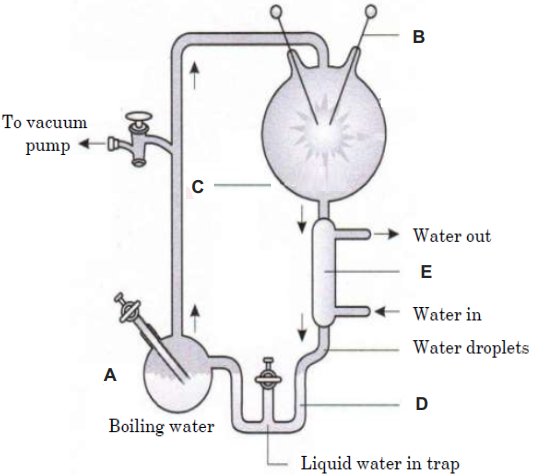
Match List - I with List - II.
Choose the correct answer from the options given below:List - I List - II (A) Part/Compound/Gases (I) C (B) Electrodes (II) B (C) Water which contains organic compounds (III) D (D) Gases (IV) E CUET 2023 Easy - Which of the following biofertilisers are free living in the soil?
(A) Anabaena
(B) Azospirillum
(C) Rhizobium
(D) AzotobacterCUET 2025 Hard
More PYQs from CUET
- What is the correct Nernst equation for the following cell?
\(Zn(s)|Zn^{2+}||Ag^{+}|Ag(s)\)CUET 2025 Easy - \(\int \frac{x^3-1}{x^2} d x\) is equal toCUET 2025 Easy
- Which of the following is not an essential amino acid ?CUET 2025 Medium
- Match List I with List II. "A is a non-singular matrix of order n."
Choose the correct answer from the options given below:List - I List - II (A) \(|\operatorname{adj} A |\) (I) \(\frac{1}{| A |} A\) (B) \((\operatorname{adj} A)^{-1}\) (II) \(2^n|A|\) (C) \(\operatorname{adj}(\operatorname{adj} A )\) (III) \(| A |^{n-2} A\) (D) \(|2 A |\) (IV) \(|A|^{n-1}\) CUET 2023 Hard - At one place on earth, the resultant magnetic field is 0.25 G and the angle of dip is 45°. The horizontal component of earth's magnetic field will beCUET 2025 Easy
- Answer the question on basis of passage given below :
P block elements are placed in groups 13 to 18 of the periodic table. Their valence shell electronic configuration is \(ns^2 np^{1-6}\). Group 16 of the p block elements are known as the group of chalcogens having \(ns^2 np^4\) as their general electronic configuration. They exhibit number of oxidation states but the stability of \(- 2\) oxidation state decreases down the group. They are sometimes also known as group of chalcogens as the name is derived from the Greek word for brass and points to the association of sulphur and its congeners with copper. Their ionisation enthalpy decreases down the group. Oxygen shows anomalous behaviour due to its small size and high electronegativity.
Identify the epsom salt out of the following salts :CUET 2023 Medium