


CUET · BIOLOGY · PYQ PAPER 2025
Read the passage carefully and answer the questions given along
Our immune system plays the major role in preventing diseases when we are exposed to disease-causing agents. Immunity is of two types: (i) Innate immunity and (ii) Acquired immunity. The human immune system consists of lymphoid organs, tissues, cells and soluble molecules like antibodies. The immune system also plays an important role in allergic reactions, auto-immune diseases and organ transplantation. The primary lymphoid organs are bone marrow and thymus. The secondary lymphoid organs are spleen, lymph nodes, tonsils, Peyer's patches of small intestine and appendix. There is lymphoid tissue also located within the lining of the major tracts (respiratory, digestive and urogenital tracts) called mucosa associated lymphoid tissue (MALT). It is important to note that HIV/AIDS is not spread by mere touch or physical contact; it spreads only through body fluids. AIDS has no cure, prevention is the best option. Adolescence is accompanied by several biological and behavioural changes and surveys and statistics show that use of drugs and alcohol has been on the rise especially among the youth. Factors associated with drug and alcohol abuse among adolescents are a child's natural curiosity, stress, the perception among youth that it is 'cool' or progressive to smoke, media exposure and an unstable or unsupportive family structures and peer pressure. It is best to identify the situations that may push an adolescent towards use of drugs or alcohol, and to take remedial measures well in time.
Which one of the following structures is not an example of a cellular barrier in innate immunity?
- A Protein interferon
- B PMNL neutrophils
- C Lymphocytes
- D Macrophages
Answer & Solution
Correct Answer
(A) Protein interferon
Step-by-step Solution
Detailed explanation
Protein interferon
See the Complete Solution
Get step-by-step explanations for this and 2.5 Lakh+ more JEE, NEET & CET questions.
- Unlock all solutions
- Practice the full chapter
- Track accuracy across PYQs
4.8 rated on Google Play · 14,000+ reviews
More questions from BIOLOGY
- Which one of the following is NOT a method of molecular diagnosis for early detection of a disease?CUET 2023 Medium
- Read the following paragraph and answer the given questions.
Repeated amplification is achieved by the use of a thermostable DNA polymerase (isolated from a bacterium, Thermus aquaticus), which remain active during the high temperature induced denaturation of double stranded DNA. The separated DNA fragments can be visualised only after staining the DNA with a compound known as ethidium bromide followed by exposure to UV radiation. The separated bands of DNA are cut out from the agarose gel and extracted from the gel piece. The convention for naming these enzymes is the first letter of the name comes from the genus and the second two letters come from the species of the prokaryotic cell from which they were isolated, e.g., EcoRI comes from Escherichia coli RY 13. In EcoRI, the letter 'R' is derived from the name of strain. Roman numbers following the names indicate the order in which the enzymes were isolated from that strain of bacteria. Stanley Cohen and Herbert Boyer accomplished this in 1972 by isolating the antibiotic resistance gene by cutting out a piece of DNA from a plasmid which was responsible for conferring antibiotic resistance. Since the DNA is enclosed within the membranes, we have to break the cell open to release DNA, RNA, protein, polysaccharides etc. The RNA can be removed by treatment with ribonuclease whereas proteins can be removed by treatment with protease. Other molecules can be removed by appropriate treatments and purified DNA ultimately precipitates out after the addition of chilled ethanol.
In the PCR, the thermostable DNA polymerase enzyme is obtained from:CUET 2025 Hard - Observe the diagram and answer the following questions:
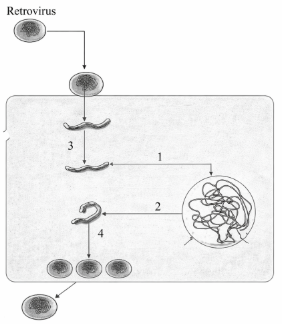
Due to decrease in the number of helper T cells the AIDS patient become.CUET 2023 Easy - The beetle used as a biocontrol agent for aphids and mosquitoes is:CUET 2024 Easy
- Match List I with List II.
Choose the correct answer from the options given below:LIST I LIST II A. Lungs of the planet I. Bali tiger B. Invasive species II. Taxol C. Anti cancer drug III. Amazon rain forests D. Extinct species IV. Parthenium CUET 2023 Medium - Which of the following is not a sexually transmitted disease?CUET 2023 Medium
More PYQs from CUET
- A square shaped wire loop of side L is carrying a current I. What is the magnetic field at the point of intersection of diagonals of the square wire loop ?CUET 2023 Easy
- Read the passage carefully and answer the Questions
Werner in 1898, propounded his theory of coordination compounds. In coordination compounds metals show two types of linkages (valences)-primary and secondary. The primary valences are normally ionisable and are satisfied by negative ions. The secondary valences are non-ionisable. These are satisfied by neutral molecules or negative ions. The secondary valence is equal to the coordination number and is fixed for a metal. The ions or group bound by the secondary linkages to the metal have characteristic spatial arrangements corresponding to the different coordination numbers. Both double salts as well as complexes are formed by the combination of two or more stable compounds in stoichiometric ratio. However, they differ in the fact that double salts such as carnallite, Mohr's salt, potash alum etc. dissociate into simple ions completely when dissolved in water. But complex ions do not dissociate completely into simple ions.
Which of the following statement is correct as per Werner theory?CUET 2025 Easy - A bulb of \( 100 \text{ W} \) glows for \( 6 \text{ hours} \) a day. The units of energy consumed in \( 7 \text{ days} \) would be :CUET 2023 Hard
- For a given convex lens, if the object distance is:
(A) \(u = -\infty\)
(B) \(u = -2f\)
(C) \(u = -f\)
(D) \(u = -f/3\)
The distance of the image is arranged in decreasing order:
Choose the correct answer from the options given below:CUET 2025 Medium - The relation R in the set {1, 2, 3} given by R = {(1,1), (2, 2), (3, 3), (1, 2), (1, 3), (2, 3)} isCUET 2025 Hard
- Verhulst-Pearl Logistic Growth is described by the following equation:
dN/dt = rN (K-N)/K, where 'r' denotes the-CUET 2025 Easy