


CUET · BIOLOGY · PYQ PAPER 2023
Observe the figure and answer the question (Q46-50):
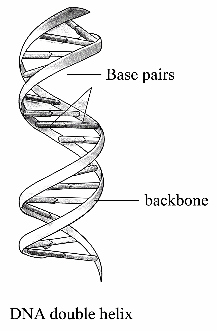
Number of nitrogenous bases common between RNA and DNA is:
- A Four
- B Three
- C Two
- D One
Answer & Solution
Correct Answer
(B) Three
Step-by-step Solution
Detailed explanation
Three
See the Complete Solution
Get step-by-step explanations for this and 2.5 Lakh+ more JEE, NEET & CET questions.
- Unlock all solutions
- Practice the full chapter
- Track accuracy across PYQs
4.8 rated on Google Play · 14,000+ reviews
More questions from BIOLOGY
- Observe the diagram and answer the question given below .
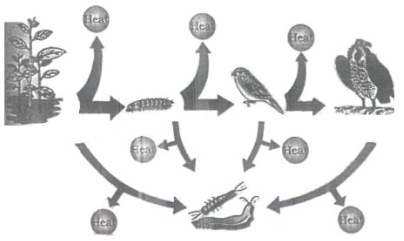
Each trophic level has a certain mass of living material at a particular time called as:CUET 2023 Easy - Which one of the followings is not a feature of insecticidal protein crystals formed by Bacillus thuringiensis: -CUET 2025 Easy
- Read the following paragraph and answer the given questions.
RNAi takes place in all eukaryotic organisms as a method of cellular defense. The source of this complementary RNA could be from an infection by viruses having RNA genomes or mobile genetic elements (transposons) that replicate via an RNA intermediate. Insulin from an animal source, though caused some patients to develop allergy or other types of reactions to the foreign protein. Insulin consists of two short polypeptide chains: chain A and chain B, that are linked together by disulphide bridges. Transgenic mice are being developed for use in testing the safety of vaccines before they are used on humans. Transgenic mice are being used to test the safety of the polio vaccine. If successful and found to be reliable, they could replace the use of monkeys to test the safety of batches of the vaccine. Specific Bt toxin genes were isolated from Bacillusthuringiensis} and incorporated into the several crop plants such as cotton. The choice of genes depends upon the crop and the targeted pest, as most Bt toxins are insect-group specific. The toxin is coded by a gene cryIAc named cry. There are a number of them, for example, the proteins encoded by the genes cryIAc and cryIIAb control the cotton bollworms, that of cryIAb controls corn borer.
Identify the incorrect fact about the genetic modification?CUET 2025 Hard - Which of the following is not the salient feature of Human Genome Project (HGP)?CUET 2025 Medium
- Select the incorrect statements with respect to the origin and evolution of man.
A. Ramapithecus was more man like primates
B. Dryopithecus was more ape- like primates
C. Australopithecines probably lived in East Asian grasslands
D. The first human like being the hominid was called Homo habilis
Choose the correct answer from the options given below:CUET 2023 Easy - Arrange the stages of microsporogenesis in their order of occurrence
(A) Development of pollen from microspores
(B) Formation of microspore tetrad
(C) Sporogenous tissue occupies the center of microsporangium
(D) Meiotic division in the cells of sporogenous tissue
Choose the correct answer from the options given below:CUET 2025 Hard
More PYQs from CUET
- The number of all onto functions from the set \(\{1,2, \ldots, n\}\) to itself isCUET 2023 Medium
- Haloform test is given by
(A) Formaldehyde
(B) Acetone
(C) \(\alpha\)-Phenyl ethyl alcohol
(D) Acetaldehyde
Choose the correct answer from the options given below:CUET 2025 Easy - Inversion of cane sugar is a pseudo first order reaction
\(C _{12} H _{22} O _{11}+ H _2 O \xrightarrow{ H ^{+}} C _6 H _{12} O _6+ C _6 H _{12} O _6\)
Choose the correct answer from the options given below:CUET 2025 Medium - The lines \(\frac{x}{1}=\frac{y}{2}=\frac{z}{3}\) and \(\frac{x-3}{-3}=\frac{y-4}{-6}=\frac{z-5}{-9}\) are :CUET 2023 Easy
- Decomposition of \(H _2 O _2\) follows a first order reaction.
In 50 min , the concentration of \(H _2 O _2\) decreases from 0.5 to 0.125 M.
When the concentration of \(H _2 O _2\) reaches 0.05 M.
the rate of formation of \(O _2\) will be (Given \(\log 2=0.3010\) ) :CUET 2023 Easy - Read the following paragraph and answer the given questions.
Repeated amplification is achieved by the use of a thermostable DNA polymerase (isolated from a bacterium, Thermus aquaticus), which remain active during the high temperature induced denaturation of double stranded DNA. The separated DNA fragments can be visualised only after staining the DNA with a compound known as ethidium bromide followed by exposure to UV radiation. The separated bands of DNA are cut out from the agarose gel and extracted from the gel piece. The convention for naming these enzymes is the first letter of the name comes from the genus and the second two letters come from the species of the prokaryotic cell from which they were isolated, e.g., EcoRI comes from Escherichia coli RY 13. In EcoRI, the letter 'R' is derived from the name of strain. Roman numbers following the names indicate the order in which the enzymes were isolated from that strain of bacteria. Stanley Cohen and Herbert Boyer accomplished this in 1972 by isolating the antibiotic resistance gene by cutting out a piece of DNA from a plasmid which was responsible for conferring antibiotic resistance. Since the DNA is enclosed within the membranes, we have to break the cell open to release DNA, RNA, protein, polysaccharides etc. The RNA can be removed by treatment with ribonuclease whereas proteins can be removed by treatment with protease. Other molecules can be removed by appropriate treatments and purified DNA ultimately precipitates out after the addition of chilled ethanol.
In the PCR, the thermostable DNA polymerase enzyme is obtained from:CUET 2025 Hard