


COMEDK · Physics · 16. Waves and Sound
A source of sound emits sound waves at frequency \(f_0\). It is moving towards an observer with fixed speed \(v_s\left(v_s < v\right.\), where \(v\) is the speed of sound in air.) If the observers were to move towards the source with speed \(v_0\), one of the following two graphs \((A\) and \(B)\) will give the correct variation of the frequency \(f\) heard by the observer as \(v_0\) is changed.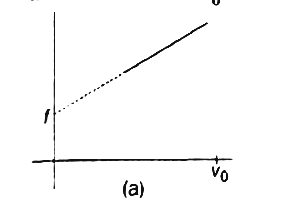
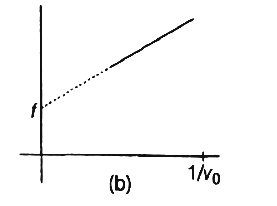
The variation of \(f\) with \(v_0\) is given correctly by
- A \(\operatorname{graph} A\) with slope \(=\dfrac{f_0}{\left(v+v_s\right)}\)
- B graph \(B\) with slope \(=\dfrac{f_0}{\left(v-v_s\right)}\)
- C graph \(A\) with slope \(=\dfrac{f_0}{\left(v-v_s\right)}\)
- D graph \(B\) with slope \(=\dfrac{f_0}{\left(v+v_s\right)}\)
Answer & Solution
Correct Answer
(C) graph \(A\) with slope \(=\dfrac{f_0}{\left(v-v_s\right)}\)
Step-by-step Solution
Detailed explanation
According to the Doppler effect, when a source of sound moving with speed \(v_s\) towards a stationary observer emits sound of frequency \(f_0\), and the observer moves towards the source with speed \(v_0\), the observed frequency \(f\) is given by the formula:…
See the Complete Solution
Get step-by-step explanations for this and 2.5 Lakh+ more JEE, NEET & CET questions.
- Unlock all solutions
- Practice the full chapter
- Track accuracy across PYQs
4.8 rated on Google Play · 14,000+ reviews
More questions from Physics
- Ground waves have wavelengthCOMEDK 2020 Easy
- Two cells with the same emf \(E\) and different internal resistances \(r_1\) and \(r_2\) are connected in series to an external resistance \(R\). If the potential difference across the first cell is zero then value of \(R\).COMEDK 2023 Medium
- When an alternating voltage source \(V=100 \sin \left(100 \pi t+\frac{\pi}{6}\right)\) is applied to a pure capacitor of \(1 \mu \mathrm{~F}\), then the instantaneous value of current through capacitor isCOMEDK 2024 Hard
- What should be the value of self-inductance of an inductor that should be connected to \(220 \mathrm{~V}\) \(50 \mathrm{~Hz}\) supply, so that a maximum current of \(0.9\) A flows through it?COMEDK 2021 Medium
- A convex lens is made of 3 layers of glass of 3 different materials as in the figure.
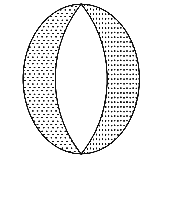
A point object is placed on its axis. The number of images of the object areCOMEDK 2020 Medium - If \(\mu_0\) is the permeability of free space and \(\varepsilon_0\) permittivity of free space then the dimension for \((\mu_0\,\varepsilon_0)^{1/2}\) is :COMEDK 2026 Easy
More PYQs from COMEDK
- A wind mill converts a fixed fraction of the wind energy intercepted by its blades into electrical energy. The electrical power output P is related to the velocity of wind v asCOMEDK 2025 Medium
- If the earth shrinks in its size (radius) mass remaining the same, the value of \(g\) on its surface willCOMEDK 2016 Easy
- Three fair dice are thrown. What is the probability of getting a total of 15 given that they exhibit three different numbers that are in arithmetic progression?COMEDK 2025 Medium
- Which one of the following is the correct statement?COMEDK 2025 Easy
- If \(A=\left[\begin{array}{ccc}1 & -1 & 1 \\ 2 & 1 & -3 \\ 1 & 1 & 1\end{array}\right], 10 B=\left[\begin{array}{ccc}4 & 2 & 2 \\ -5 & 0 & \alpha \\ 1 & -2 & 3\end{array}\right]\) a is the inverse of \(A\), then the value of \(\alpha\) isCOMEDK 2020 Medium
- Let '\(a\)' and '\(b\)' be two numbers where \(a < b\). The geometric mean of these numbers exceeds the smaller number by 12 and the arithmetic mean is smaller than the larger number by 24. Then the value of \(|b - a|\) is:COMEDK 2026 Medium