


AP EAMCET · Maths · Trigonometric Equations
The smallest positive root of the equation \(\tan x-x=0\) lies in the interval
- A \(\left(0, \frac{\pi}{2}\right)\)
- B \(\left(\frac{\pi}{2}, \pi\right)\)
- C \(\left(\pi, \frac{3 \pi}{2}\right)\)
- D \(\left(\frac{3 \pi}{2}, 2 \pi\right)\)
Answer & Solution
Correct Answer
(C) \(\left(\pi, \frac{3 \pi}{2}\right)\)
Step-by-step Solution
Detailed explanation
Here, \(\tan x-x=0 \Rightarrow \tan x=x\) Clearly smallest positive root lies in the interval \[ \left(\pi, \frac{3 \pi}{2}\right) \text {. } \]
See the Complete Solution
Get step-by-step explanations for this and 2.5 Lakh+ more JEE, NEET & CET questions.
- Unlock all solutions
- Practice the full chapter
- Track accuracy across PYQs
4.8 rated on Google Play · 14,000+ reviews
More questions from Maths
- If \(z_1=1-2 i ; z_2=1+i\) and \(z_3=3+4 i\), then \(\left(\frac{1}{z_1}+\frac{3}{z_2}\right) \frac{z_3}{z_2}=\)AP EAMCET 2018 Easy
- If \(\alpha, \beta, \gamma\) are distinct real numbers and \(\alpha+\beta+\gamma \neq 0\), then the points with position vectors \(\alpha \hat{\mathbf{i}}+\beta \hat{\mathbf{j}}+\gamma \hat{\mathbf{k}}, \beta \hat{\mathbf{i}}+\gamma \hat{\mathbf{j}}+\alpha \hat{\mathbf{k}}\) and \(\gamma \hat{\mathbf{i}}+\alpha \hat{\mathbf{j}}+\beta \hat{\mathbf{k}}\) areAP EAMCET 2019 Easy
- If tangents are drawn to the ellipse at the ends of latus recta, then the area of the quadrilateral thus formed isAP EAMCET 2019 Medium
- If \({ }^n C_r\) denotes the number of combinations of ' \(n\) ' things taken ' \(r\) ' at a time, then the expression \({ }^n C_{r+1}+{ }^n C_{r-1}+2^n C_r\) equalsAP EAMCET 2020 Medium
- The radius of a circle is increasing at a rate of \(0.1 \mathrm{~cm} \mathrm{~s}^{-1}\). Then the rate of change of area, when its radius is \(5 \mathrm{~cm}\), is .........AP EAMCET 2020 Easy
- In a triangle ABC, if \(\mathrm{r}_1=3, \mathrm{r}_2=4, \mathrm{r}_3=6\), then \(\mathrm{b}=\)AP EAMCET 2025 Medium
More PYQs from AP EAMCET
- \(\pi\) is a plane passing through the origin and containing two lines whose direction ratios are \(1,-2,2\) and 2, 3, -1 then direction ratios of the line of intersection of the planes \(x-y-z+1=0\) and \(\pi\) areAP EAMCET 2018 Hard
- \(\frac{(1+i)^{2011}}{(1-i)^{2009}}\) is equal toAP EAMCET 2011 Medium
- AP EAMCET 2020 Medium
- Consider the following structure.
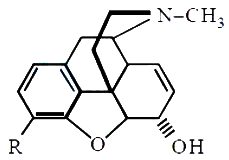
For codeine \(\mathrm{R}\) stands forAP EAMCET 2017 Easy - \(\int_{-\pi}^\pi x^2(\sin x) d x=\)AP EAMCET 2020 Easy
- If \(\mathrm{A}, \mathrm{B}, \mathrm{C}\) and \(\mathrm{D}\) represent velocity, acceleration, inductance and capacitance respectively, then \(\mathrm{A}^{-1} \mathrm{BCD}\) has the dimensions ofAP EAMCET 2017 Easy